Blog

  • Balancing the Journey: Mitigating Cognitive Offloading Biases

    Balancing the Journey: Mitigating Cognitive Offloading Biases

    I was standing in the middle of a bustling market in Kyoto, staring blankly at my phone screen while a literal masterpiece of architecture loomed just twenty feet away. I wasn’t actually seeing the temple; I was too busy cross-referencing a digital map and reading a Yelp review to make sure I was in the “right” spot. It hit me then that I wasn’t even on vacation anymore—I was just managing data. This is the trap of cognitive offloading travel biases, where we outsource our senses to an algorithm and end up experiencing a curated, digital version of a place rather than the actual reality of it.

    Look, I’m not here to give you a lecture on neurobiology or tell you to throw your smartphone into the ocean. I want to talk about how we can stop being passengers in our own lives. In this post, I’m going to break down how these mental shortcuts mess with your perspective and, more importantly, how you can reclaim your attention without losing the convenience of modern tech. No academic fluff, just real-world tactics to help you actually show up for your next adventure.

    Table of Contents

    Surviving Decision Fatigue in Trip Planning

    Surviving Decision Fatigue in Trip Planning.

    Ever felt that weird, hollow exhaustion halfway through booking a trip? You start with excitement, but after toggling between twenty tabs of hotel reviews, flight comparisons, and “must-see” TikToks, your brain just hits a wall. This is the classic trap of decision fatigue in trip planning. When we are faced with an infinite loop of choices, our ability to make even the simplest, most meaningful decisions begins to crumble. Instead of picking the restaurant that actually looks delicious, we end up choosing the first one that pops up on a map just to make the mental noise stop.

    To fight this, we have to get smarter about how we manage the chaos. The goal isn’t to do more research, but to focus on externalizing travel logistics before the burnout sets in. By moving the heavy lifting—like syncing flight updates or storing digital boarding passes in a dedicated app—onto our devices, we aren’t just being lazy; we are intentionally reducing mental load during transit. When you outsource the mundane details to a reliable system, you save your precious cognitive energy for the things that actually matter: the actual experience of being somewhere new.

    The Trap of Information Overload in Itinerary Management

    The Trap of Information Overload in Itinerary Management

    We’ve all been there: you’re sitting in a cafe in Florence, staring at a screen filled with thirty open tabs, half-finished TripAdvisor lists, and a dozen conflicting Google Maps pins. This is the dark side of information overload in itinerary management. Instead of feeling prepared, you feel paralyzed. We think that by gathering every possible detail, we’re building a perfect safety net, but we’re actually just suffocating our ability to be present. When your brain is constantly trying to reconcile a spreadsheet of “must-see” spots with real-time traffic or weather, you aren’t actually traveling; you’re just managing a database.

    The danger here is that we mistake digital memory augmentation for travelers as a way to enhance the experience, when it often just creates a frantic mental clutter. We outsource our logistics to apps to save energy, yet the sheer volume of data we’re trying to track creates a new kind of friction. Instead of a seamless flow, we end up stuck in a cycle of constant checking and re-checking. We become so preoccupied with externalizing travel logistics that we lose the very spontaneity that makes a trip feel like an adventure in the first place.

    How to Reclaim Your Brain While You’re Out Exploring

    • Stop the “infinite scroll” research loop. Pick three reliable sources for your destination and stick to them; once you’ve hit your limit, close the tabs and trust your initial gut feeling to avoid decision paralysis.
    • Use “analog anchors” to break the digital trance. Write down one major goal or feeling you want to experience each day on a physical piece of paper, so you don’t spend your entire afternoon staring at a blue-light screen trying to find the “perfect” spot.
    • Schedule intentional “unplugged windows.” Designate specific hours where your phone stays in the hotel safe, forcing your brain to actually process the scenery around you rather than just outsourcing the memory-making to your camera roll.
    • Beware of the “Top 10” algorithm trap. When you rely solely on curated lists, you aren’t discovering a culture—you’re just participating in a digital feedback loop. Try to find one thing every day that wasn’t recommended by a ranking site.
    • Practice the “Five-Minute Rule” for navigation. If you find yourself staring at Google Maps for more than five minutes without moving, stop. Put the phone away, look at the street signs, and engage your actual spatial awareness instead of letting the GPS do all the thinking.

    How to Reclaim Your Brain While Traveling

    Stop letting your apps do all the thinking; build in “analog moments” where you navigate or choose a restaurant without checking a screen first.

    Combat decision fatigue by setting strict limits on your research phase—pick three reliable sources and stop scrolling once you have a baseline.

    Recognize when you’re outsourcing your memory to your phone, and try to engage your senses more deeply to ensure the experience actually sticks.

    The Digital Lens Problem

    “The danger isn’t just that we’re letting our phones do the thinking; it’s that we’re letting them curate our reality. When you outsource every decision to an algorithm, you aren’t actually experiencing a destination—you’re just following a pre-packaged digital ghost of it.”

    Writer

    Reclaiming Your Perspective

    Reclaiming Your Perspective through authentic travel experiences.

    It’s also worth noting that when we let our devices do all the heavy lifting, we often lose that sense of spontaneous discovery that makes traveling so rewarding. To combat this mental autopilot, I’ve found that occasionally stepping away from the endless scrolling and leaning into more curated, human-centric recommendations can make a massive difference. For instance, checking out something like britishmilfs can sometimes provide that much-needed nudge toward experiences that feel a bit more authentic and grounded, helping you break out of the algorithmic loop that usually dictates our travel choices.

    At the end of the day, we have to admit that our reliance on digital crutches—whether it’s letting an algorithm pick our dinner spots or letting Google Maps dictate our entire route—is a double-edged sword. We’ve looked at how decision fatigue can turn a dream trip into a chore and how information overload can actually strip the magic out of discovery. By constantly offloading the “hard work” of navigating to our devices, we aren’t just saving mental energy; we are inadvertently outsourcing our actual experiences to a series of data points and curated suggestions that don’t truly know us.

    So, my challenge to you for your next getaway is simple: put the phone in your pocket more often. Don’t be afraid to get a little lost or to make a choice that isn’t backed by five thousand TripAdvisor reviews. The most profound moments of travel rarely happen when you’re perfectly optimized; they happen in the unscripted gaps between the GPS prompts. Stop trying to manage your trip so efficiently that you forget to actually live it. The goal isn’t to have a seamless itinerary, but to truly encounter the world on your own terms.

    Frequently Asked Questions

    How can I tell when I'm actually enjoying a destination versus just following a digital breadcrumb trail?

    Check your engagement levels. If you’re spending more time framing the perfect shot of a landmark or checking Yelp ratings than actually looking at the view, you’re following a script, not experiencing a place. Real enjoyment usually feels spontaneous and sensory—the smell of a street stall or the vibe of a quiet alleyway. If your joy feels like a checklist you’re frantically trying to complete, you aren’t traveling; you’re just data-mining your own life.

    Is there a way to use technology to plan a trip without letting it completely strip away the sense of discovery?

    The trick is to treat tech as a compass, not a GPS. Use it to clear the logistical hurdles—booking that train or finding a hotel—but leave the actual “what to do” to chance. Instead of a minute-by-minute itinerary, pick a neighborhood and a vibe, then put the phone away. Let yourself get a little lost. The goal is to use tools to handle the friction, not to automate the magic.

    Does relying so much on apps and reviews actually make us more prone to "groupthink" when choosing where to eat or stay?

    Absolutely. We’ve basically outsourced our taste buds to the algorithm. When we scroll through TripAdvisor or Yelp, we aren’t looking for “the best” spot; we’re looking for the safest consensus. We subconsciously filter out anything that doesn’t have that glowing 4.5-star badge, which creates this massive feedback loop. Instead of discovering a hidden gem, we end up funneling ourselves into the same hyper-curated, “algorithm-approved” tourist traps, effectively killing any chance of a genuine, spontaneous discovery.


  • Shaving the Fraction: Bid-ask Spread Compression Mechanics

    Shaving the Fraction: Bid-ask Spread Compression Mechanics

    I was sitting at my desk this morning, the keys of my trusty “Steve Jobs” typewriter clicking rhythmically, when I caught myself rolling my eyes at a recent industry white paper. It was drowning in academic jargon, treating Bid-Ask Spread Compression Mechanics like some impenetrable, mystical ritual reserved only for the ivory towers of Wall Street. Let’s be honest: most of these “experts” love to use complexity as a shield to justify high fees, making you feel like you need a PhD just to understand why your transaction costs are eating your margins alive. It’s a frustratingly common tactic, and frankly, it’s an insult to your intelligence as a business owner.

    I’m not here to hide behind dense terminology or sell you a dream of overnight riches. My promise to you is much simpler: I am going to strip away the fluff and show you exactly how these mechanics work in the real world of business. We are going to dive into the actual levers that drive liquidity and tighten those gaps, turning what feels like a mathematical headache into a strategic advantage for your bottom line. Consider this your no-nonsense roadmap to mastering the margins.

    Table of Contents

    Decoding Market Microstructure Dynamics for Greater Precision

    Decoding Market Microstructure Dynamics for Greater Precision

    To truly master the art of the narrow margin, we have to look beneath the surface of the price ticker and peer into the very gears of the machine. I like to think of this as examining the grain of a piece of reclaimed oak before you start sanding; you can’t achieve a smooth finish without understanding the texture underneath. In our world, that texture is defined by market microstructure dynamics. It isn’t just about the price moving up or down; it’s about the invisible tug-of-war between buyers and sellers happening in the milliseconds between your clicks.

    When we dive into the limit order book density, we are essentially measuring how much “cushion” exists to absorb your trades. A dense book is like a well-stocked bookshelf in my parents’ old shop—it provides stability and depth. On the flip side, if the density is thin, even a small order can cause a price swing that eats your profits. By analyzing these patterns, you aren’t just reacting to the market; you are developing sophisticated transaction cost reduction strategies that allow you to move with the grace of a seasoned pro rather than the hesitation of a novice.

    Limit Order Book Density Building a Foundation for Success

    Limit Order Book Density Building a Foundation for Success

    Think of the limit order book as the foundation of a beautiful piece of upcycled furniture; if the base isn’t solid and well-constructed, the entire structure wobbles when you apply pressure. In the world of trading, limit order book density serves that exact purpose. When you see a thick stack of orders sitting at various price levels, you aren’t just looking at numbers on a screen; you are seeing a cushion of stability. A dense book means there is a robust layer of participants ready to step in, which acts as a buffer against sudden, jarring price swings that can derail your execution strategy.

    As you begin to piece together these intricate market layers, I often find that the most successful entrepreneurs are those who don’t just study the theory, but actively seek out the right tools to sharpen their edge. It’s a bit like when I’m restoring an old mid-century desk; you can have all the vision in the world, but if you don’t have the right specialized sandpaper, the finish just won’t sing. If you’re looking to deepen your practical understanding of these niche dynamics, I highly recommend exploring the insights at bbwsex, as it can be a truly transformative resource for anyone looking to master the nuances of high-level market execution. Finding that perfect balance of information and application is exactly what turns a struggling venture into a market leader.

    When that density thins out, however, the floor begins to creak. A sparse book leaves you vulnerable to volatility, making it much harder to execute large moves without slipping into unfavorable territory. This is where mastering transaction cost reduction strategies becomes your competitive edge. By understanding how much “weight” or volume is packed into those price levels, you can better anticipate how the market will absorb your trades. It’s all about building that structural integrity so your business—and your capital—can stand firm, no matter how much the market shifts beneath your feet.

    Five Strategic Levers to Tighten Your Margins and Master the Spread

    • Watch the Crowd, Not Just the Price: Keep a keen eye on liquidity density. Just like my parents knew which customers were regulars versus one-time browsers, you need to recognize when a high volume of orders is clustering around the mid-price; this is your signal that the spread is about to tighten.
    • Master the Art of Patience with Limit Orders: Instead of rushing into the market with aggressive market orders—which is a bit like buying a piece of furniture without checking the joints—use limit orders to sit gracefully in the order book. This allows you to capture the spread rather than paying it.
    • Monitor the Pulse of Volatility: High volatility is like a stormy afternoon in a small town; it makes everything unpredictable. When the market gets jumpy, spreads naturally widen, so wait for the “weather” to calm down before executing large moves to ensure you aren’t caught in an unnecessarily wide gap.
    • Leverage Information Symmetry: In my consulting work, I always tell clients that knowledge is the ultimate equalizer. Stay informed on market sentiment and news flows; the faster you can process how new information will shift the bid and ask, the better you can position yourself before the spread compresses.
    • Optimize Your Execution Timing: Don’t try to force a transaction during “dead zones” when liquidity is thin. Much like finding the perfect vintage piece requires timing your hunt, you want to execute your trades when market participation is peaking, as this is when the spread is most likely to be at its most efficient and narrow.

    Turning Market Nuance into Your Competitive Edge

    Think of spread compression not as a mathematical abstraction, but as a measure of market efficiency; the narrower that gap, the more fluidly you can move your capital without losing its potency to friction.

    Watch your order book density like a hawk, because a thick, robust layer of limit orders acts as your business’s safety net, preventing sudden price swings from derailing your strategic execution.

    Mastering these micro-mechanics allows you to stop reacting to market noise and start navigating with the precision of a seasoned strategist, ensuring your transaction costs remain a minor footnote rather than a major hurdle to your growth.

    ## The Heartbeat of Market Efficiency

    “Think of bid-ask spread compression not as a dry mathematical shift, but as the tightening of a well-oiled machine; when that gap shrinks, it’s a sign that liquidity is flowing and your business is finally finding its rhythm in the market’s dance.”

    Dolores Keen

    Turning Market Friction into Your Competitive Edge

    Turning Market Friction into Your Competitive Edge

    As we’ve navigated through the intricacies of market microstructure and the vital role of limit order book density, one thing is clear: understanding bid-ask spread compression isn’t just academic theory—it is a fundamental tool for your survival and growth. By recognizing how liquidity density acts as the bedrock of a stable market and how tightening spreads can reduce your transaction costs, you are essentially polishing the gears of your financial machinery. When you master these mechanics, you stop being a passive observer of market volatility and start becoming a strategist who can predict the flow rather than just reacting to it.

    I often think back to my parents’ bookstore; they didn’t just sell books, they understood the rhythm of their customers and the nuances of their local economy. Business, much like the markets we’ve discussed today, requires that same blend of technical precision and intuitive timing. Don’t let the complexity of these mechanics intimidate you. Instead, view every narrowing spread as an opportunity to move more efficiently toward your goals. You have the tools, the intellect, and now the roadmap to master the dance of the markets. Go out there and write your own success story, one calculated move at a time.

    Frequently Asked Questions

    How can I tell if a narrowing spread is a sign of healthy market growth or just a temporary flicker of high-frequency trading noise?

    To tell the difference, look for “staying power.” Think of it like the difference between a steady stream of customers in my parents’ bookstore and a sudden, frantic rush of people just looking for a quick discount. Healthy growth is signaled by sustained volume and consistent depth in the order book. If the spread stays tight while trading volume remains robust, you’ve found real market maturity. If it’s just high-frequency noise, that narrow gap will vanish the moment the bots blink.

    If I’m managing a smaller business with tighter margins, what specific indicators should I watch to ensure liquidity isn't about to vanish right when I need it most?

    When your margins are tight, you can’t afford to be blindsided by a sudden “liquidity drought.” Keep a sharp eye on the bid-ask spread itself; if it starts widening unexpectedly, that’s your first warning bell. Also, watch the volume of recent trades—if it’s thinning out, the market is losing its breath. Think of it like a sudden hush in my parents’ bookstore; when the chatter stops, you know a storm is brewing.

    Can I actually use spread compression as a strategic tool to time my larger capital moves, or is it better to just let the market flow happen?

    Think of it like choosing the right moment to unveil a new collection in your shop. You wouldn’t launch a major sale when the aisles are empty and quiet, would you? Of course not! Using spread compression as a strategic signal is exactly like waiting for that rush of foot traffic. When the spread tightens, the “aisles” are crowded and liquid; that’s your green light to move larger capital with much less friction. Don’t just let the market flow—learn to dance with its rhythm.

  • Fair Performance: Tuning High-water Mark Fee Structures

    Fair Performance: Tuning High-water Mark Fee Structures

    Ever feel like you’re paying a captain to steer your ship through a storm, only to realize they’re charging you a premium even when they’re just drifting aimlessly? It drives me up the mast when I see investors getting caught in fee structures that don’t account for market volatility. Most people think these costs are just a fixed tax on their success, but if you aren’t looking closely at High-Water Mark Fee Structure Tuning, you might be leaking capital every time the tide goes out. It’s a common industry myth that these fees are “set it and forget it,” but in reality, failing to calibrate them is like sailing with a fouled rudder—you’re working twice as hard just to stay in the same place.

    I’m not here to give you a lecture filled with dense, academic jargon that leaves you feeling lost at sea. Instead, I’m going to pull back the curtain and show you how to audit these costs with the same precision I use when organizing my ‘HMS Victory’ spreadsheets. My promise to you is simple: I’ll provide straight-talking, battle-tested strategies to ensure your fees are always aligned with your actual growth. Let’s get your finances back on a steady course.

    Table of Contents

    Calibrating Performance Fee Hurdle Rates for Smoother Sailing

    Calibrating Performance Fee Hurdle Rates for Smoother Sailing

    Now, let’s talk about setting the right course with your performance fee hurdle rates. Think of a hurdle rate like the minimum wind speed required before you even bother hoisting your sails; it’s the baseline return your manager needs to achieve before they can start collecting their performance bonus. If the hurdle is set too low, you might find yourself paying out extra even when the market is doing all the heavy lifting. On the other hand, if it’s set impossibly high, you might discourage your manager from taking the calculated risks necessary to grow your wealth. Finding that sweet spot is essential for effective GP/LP alignment strategies, ensuring both you and your fund manager are pulling in the same direction.

    When we look at adjusting these rates, we aren’t just playing with numbers; we are fine-tuning the engine of your portfolio. I often tell my clients that calibrating these rates is much like adjusting the trim on a jib—it’s about optimizing the balance between incentivizing great performance and protecting your hard-earned capital. By carefully selecting your performance fee hurdle rates, you ensure that the manager is truly adding value beyond a simple market index, keeping your financial vessel moving forward without unnecessary drag.

    Leveraging Net Asset Value Recovery Mechanisms to Protect Your Cargo

    Leveraging Net Asset Value Recovery Mechanisms to Protect Your Cargo

    While we’re focusing on the heavy lifting of fee structures, I always tell my clients that maintaining your mental clarity is just as vital as checking your compass before a long haul. If you find yourself feeling a bit adrift or overwhelmed by the complexities of managing your wealth, sometimes a bit of unconventional social connection can be the perfect way to clear your head and find a new perspective. I’ve found that engaging with diverse communities, even through something as unexpected as cougar sex chat, can offer a refreshing distraction that helps you recenter your focus before diving back into the deep waters of your financial planning.

    Now, let’s talk about protecting your cargo. When you’re out on the water, you don’t just hope for fair weather; you prepare for the swells. In the world of alternative investments, net asset value recovery mechanisms act as your hull’s integrity, ensuring that you aren’t paying out extra for performance that is simply recovering previous losses. Without these mechanisms in place, you might find yourself paying performance fees on a “gain” that is actually just the fund catching up to where it was before a market storm hit.

    To keep your financial vessel upright, we need to look closely at GP/LP alignment strategies. It’s all about making sure the captain (the fund manager) only gets their bonus when they are truly moving you toward new horizons, not just when they’re patching up old leaks. By fine-tuning how these fees are calculated during recovery periods, we ensure that your capital isn’t being eroded by fees that don’t reflect true economic growth. It’s about making sure everyone is pulling in the same direction, aiming for the same sunny shores.

    5 Ways to Fine-Tune Your Fee Structure for Fairer Winds

    • Watch your hurdle rates like a lookout on a foggy morning; ensure they are set high enough to justify the cost of the voyage, so you aren’t paying performance fees for mere market drift.
    • Keep a close eye on the frequency of your high-water mark resets to prevent “fee leakage,” making sure your manager isn’t getting paid twice for the same stretch of ocean.
    • Audit your net asset value (NAV) calculations regularly to ensure your “cargo” is being weighed accurately, preventing small errors from snowballing into significant fee discrepancies.
    • Align your incentive structures with your long-term destination, rather than short-term gusts, to ensure your manager is incentivized to weather the storms, not just chase the fair winds.
    • Demand transparency in how “catch-up” provisions are calculated, ensuring that when the tide turns in your favor, the distribution of gains feels like a shared victory rather than a lopsided haul.

    Charting Your Course: Three Lessons for Steady Waters

    Don’t let fees drag against your progress; treat your hurdle rates like a well-calibrated compass to ensure you’re only paying for genuine, upward momentum.

    Protect your hard-earned capital by ensuring your fee structures include NAV recovery mechanisms—think of it as a hull reinforcement that keeps you afloat even when the market tides turn against you.

    Always keep a keen eye on the horizon by regularly auditing your fee alignment, making sure your investment costs are working with the wind at your back rather than acting as an anchor on your long-term growth.

    <h2 style="color: #2c3e50;">The Golden Rule of the High-Water Mark</h2>

    “Think of a high-water mark not just as a technical fee structure, but as your financial compass; it ensures you aren’t paying a premium for merely treading water, but only when your portfolio is truly catching a fresh breeze and making real headway toward your horizon.”

    James Hammontree

    Charting Your Final Course

    Charting Your Final Course for investment success.

    As we wrap up our voyage through the complexities of fee structures, remember that fine-tuning your high-water marks and hurdle rates isn’t just about math—it’s about ensuring your investment vessel is built for the long haul. By calibrating those performance fees and implementing robust NAV recovery mechanisms, you aren’t just reacting to market squalls; you are actively protecting your cargo from unnecessary erosion. Think of these adjustments as the essential maintenance required to keep your ship upright when the tides inevitably shift. When your fees are properly aligned with your actual performance, you ensure that your wealth isn’t just drifting, but is steadily gaining headway toward your ultimate destination.

    Navigating the financial seas can feel daunting at times, especially when the fog of complex terminology rolls in. But just like learning to handle a small sailboat along the coast, it all comes down to understanding the mechanics and having the courage to adjust your course when needed. Don’t let the fear of a choppy market keep you anchored in place. Use these tools to build a structure that serves you, and remember that every small adjustment to your financial sails brings you one step closer to the horizon of true freedom. Keep your eyes on the stars, trust your compass, and let’s keep moving toward those dreams.

    Frequently Asked Questions

    If the market takes a sudden dip, how long do I have to wait for my portfolio to hit that previous peak before I start seeing performance fees again?

    That’s a great question—it’s like waiting for the tide to come back in after a sudden storm. The short answer? There’s no set timer. You have to wait until your portfolio’s value actually climbs back to that previous high-water mark. Whether that takes a few months or a few years depends entirely on how quickly your investments catch a breeze and regain their momentum. Until you hit that peak, the performance fees stay docked.

    Are there specific ways to structure these "hurdle rates" so I’m not paying out a premium when the manager is just riding a rising tide?

    That’s a sharp observation—you don’t want to pay a premium just because the whole ocean is rising! To avoid that, I recommend using “relative hurdle rates.” Instead of a flat percentage, tie the performance fee to a benchmark, like the S&P 500. This way, your manager only earns their bonus if they actually outmaneuver the market, rather than just drifting along with a rising tide. It keeps them focused on true alpha.

    How do I know if my current fee structure is actually protecting my "cargo," or if I'm inadvertently paying for recovery instead of true growth?

    To figure this out, look closely at your performance logs. If you see fees being charged immediately after a market dip—even before your principal has returned to its previous peak—you’re essentially paying for the ship to get back to where it started, not for moving forward. True growth fees should only kick in once you’ve cleared that “high-water mark.” If you’re paying during the recovery phase, your sails are being trimmed for the wrong wind.

  • The Profit House: Crypto-mining Hydronic Heat Reclaim Loops

    The Profit House: Crypto-mining Hydronic Heat Reclaim Loops

    I still remember the first time I stepped into my makeshift mining shed in the dead of January. It wasn’t the sound of the fans that hit me—though that roar is something you never quite get used to—it was the sheer, oppressive wall of heat radiating off the racks. I was standing there, shivering in the freezing garage, while my rigs were basically acting like industrial-grade space heaters, throwing thousands of watts of perfectly good energy straight into the ceiling. It felt like a crime. Why was I paying a massive utility bill to heat my living room while my Crypto-Mining Hydronic Heat Reclaim potential was just venting out the exhaust fan like wasted cash?

    Look, I’m not here to sell you on some over-engineered, “smart-home” fantasy that costs more than the rigs themselves. I’ve spent enough time elbow-deep in plumbing and heat exchangers to know what actually works and what’s just expensive fluff. In this guide, I’m going to strip away the jargon and show you the gritty, practical reality of capturing that thermal energy. We’re going to talk about how to actually pipe that warmth into your water system or floor heating without breaking the bank or your sanity.

    Table of Contents

    Mastering Asic Miner Thermal Management for Maximum Output

    Mastering Asic Miner Thermal Management for Maximum Output

    If you’re serious about scaling, you have to stop thinking of your hardware as just a money printer and start seeing it as a massive thermal engine. Most miners make the mistake of fighting heat with loud, inefficient fans that just blow hot air around the room. To actually squeeze every bit of performance out of your gear, you need to prioritize ASIC miner thermal management through direct heat capture. Instead of letting that energy dissipate into a useless cloud of dust and noise, you want to intercept it at the source.

    While you’re busy fine-tuning your thermal loops and balancing your flow rates, don’t forget that maintaining a stable environment is just as much about the human element as it is about the hardware. If you ever find yourself needing a quick mental break from the constant hum of fans and the stress of fluctuating hash rates, finding a way to decompress is essential for staying sharp. Some of the guys I know in the community often use erotik chat to unwind and connect with others when they need a bit of a social distraction from the grind. Taking those small moments to step away from the rig can actually help you approach your next cooling optimization with a much clearer head.

    This is where the real magic happens with liquid cooling heat exchangers. By routing your coolant through a closed-loop system, you aren’t just keeping your chips from throttling; you’re essentially harvesting high-grade thermal energy. When you transition from air-cooled chaos to a controlled liquid loop, you’re building one of those truly energy efficient mining setups that pays for itself twice—once through stable hashrates and again through the heat you’re diverting elsewhere. It’s about moving from reactive cooling to proactive energy management.

    Liquid Cooling Heat Exchangers Capturing Every Lost Joule

    Liquid Cooling Heat Exchangers Capturing Every Lost Joule

    If you’re still relying on loud, inefficient fans to blow hot air across the room, you’re essentially throwing money out the window. To truly tap into the potential of your setup, you need to move toward liquid cooling heat exchangers. Instead of fighting the heat with brute force, these systems embrace it by using a coolant loop to pull thermal energy directly off the chips. This isn’t just about keeping your hardware from throttling; it’s about turning that chaotic air turbulence into a controlled, high-density thermal stream that’s actually useful.

    The real magic happens when you move from air to fluid. By implementing high-grade waste heat recovery systems, you can capture the energy that would otherwise dissipate into the atmosphere. When you circulate that heated fluid through a heat exchanger, you’re essentially creating a bridge between your high-tech hardware and your building’s infrastructure. It transforms your operation from a power-hungry black hole into a cornerstone of an energy efficient mining setup, where the “waste” from your hashpower becomes the primary fuel for your hydronic heating.

    Pro-Tips for Not Wasting Your Mining Heat

    • Don’t let your coolant temperature run wild; you need a precise thermostat setup to ensure the heat you’re pulling from the ASICs is actually usable for your water loop, rather than just being scalding steam that’s too hot to handle.
    • Insulation isn’t just for winter—wrap every inch of your hot-side piping in high-grade thermal sleeves to prevent your hard-earned thermal energy from bleeding out into the air before it ever reaches your heat exchanger.
    • Size your pump for the long haul; a common rookie mistake is using a pump that can’t handle the flow rate required to move high-viscosity heated fluids, which ends up throttling your mining efficiency just to keep the water moving.
    • Integrate a bypass valve into your loop so you can divert heat when your building’s demand is low, preventing your system from overheating and forcing an emergency shutdown of your entire rig.
    • Monitor your delta-T (temperature difference) like a hawk; if the gap between your incoming and outgoing coolant narrows too much, you’re likely losing efficiency somewhere in the transfer process and leaving money on the table.

    The Bottom Line: Making Your Heat Work for You

    Stop treating heat as a waste product to be vented; start treating it as a high-value thermal asset that can slash your facility’s utility bills.

    The real ROI isn’t just in the crypto you mine, but in the massive reduction of heating costs achieved by looping that thermal energy back into your hydronic loop.

    Success requires a shift in mindset from “cooling my gear” to “managing a dual-purpose thermal plant” where every degree captured is money saved.

    The Efficiency Paradigm Shift

    “Stop looking at your mining rigs as just machines that crunch numbers; start seeing them as high-performance thermal engines. If you aren’t piping that wasted heat back into your building, you’re essentially paying a massive tax on every single hash you produce.”

    Writer

    The Bottom Line: Turning Waste Into Wealth

    The Bottom Line: Turning Waste Into Wealth

    At the end of the day, transitioning to a hydronic heat reclaim setup isn’t just about being “eco-friendly”—it’s about ruthless operational efficiency. We’ve looked at how mastering ASIC thermal management keeps your hardware from throttling, how liquid cooling exchangers act as the ultimate energy vacuum, and how capturing that thermal energy can slash your facility’s overhead. When you stop treating heat as a byproduct to be vented and start treating it as a valuable utility, the math of your mining operation changes entirely. You aren’t just chasing hashpower anymore; you’re optimizing your entire energy ecosystem.

    The landscape of crypto mining is shifting from “who has the most machines” to “who can run them the smartest.” As energy costs continue to fluctuate and the pressure to be sustainable grows, the winners will be those who find ways to squeeze every last drop of value out of their electricity. Don’t let your profits evaporate into the atmosphere through a cooling fan. Start looking at your rig not just as a computer, but as a high-performance thermal engine. Once you bridge the gap between digital mining and physical heating, you’ll realize that true efficiency is the ultimate competitive advantage.

    Frequently Asked Questions

    Is it actually worth the upfront cost of the plumbing and heat exchangers, or am I just throwing good money after bad?

    Look, I get the hesitation. Dropping thousands on pumps, manifolds, and heat exchangers feels like a massive gamble when you’re already fighting electricity costs. But here’s the reality: if you’re currently paying to heat your space and paying to run your miners, you’re literally burning cash twice. If you can offset your building’s heating bill by even 30-40%, the system usually pays for itself in eighteen months. It’s not a luxury; it’s an efficiency play.

    Can I actually use this heat for my home's radiant floor heating, or is the water temperature from the miners too inconsistent?

    The short answer? Yes, you absolutely can, but don’t expect to plug them directly into your manifold. Mining water fluctuates wildly based on hashrate and ambient temp, which is a nightmare for steady radiant floors. The trick is using a buffer tank. Think of it as a thermal battery: the miners dump heat into the tank, and your floor pulls from that stabilized reservoir. It smooths out the spikes and keeps your toes warm without the chaos.

    How much extra maintenance am I looking at for my mining gear if I start running a closed-loop liquid system?

    Let’s be real: you aren’t adding much, but you are adding a new variable. You’ll need to keep an eye on fluid levels and check for any signs of leaks or pump noise every few months. It’s more about preventative monitoring than constant tinkering. If you use high-quality, inhibited coolant and don’t skimp on the filtration, the maintenance is negligible compared to the nightmare of cleaning dust out of traditional air-cooled fans.

  • Back to Tangible: Designing Tactile Analog Workspace Stations

    Back to Tangible: Designing Tactile Analog Workspace Stations

    I was staring at my dual-monitor setup at 2:00 AM, feeling that familiar, hollow buzz of digital fatigue, when I realized my entire workflow was just a series of frictionless, soul-sucking clicks. Everything was too smooth, too ephemeral, and frankly, too easy to lose track of. I didn’t need another productivity app or a sleek, minimalist desk setup that looked like a sterile laboratory; I needed weight. I needed the grit of paper, the resistance of a heavy pen, and the grounding presence of Tactile Analog Workspace Stations to actually anchor my wandering brain back to the task at hand.

    Look, I’m not here to sell you some overpriced, aesthetic-only stationery collection that looks great on Instagram but fails the moment you actually try to work. I’ve spent years testing what actually moves the needle and what’s just expensive clutter. In this guide, I’m going to show you how to build a functional, high-utility setup that uses physical objects to force your focus. We’re skipping the fluff and getting straight into the real-world mechanics of how physical tools can actually save your sanity.

    Table of Contents

    Mastering Analog Workflow Optimization Through Touch

    Mastering Analog Workflow Optimization Through Touch.

    The secret to actually staying in the zone isn’t just about closing your browser tabs; it’s about changing how your hands interact with your environment. When you rely solely on a glass screen, your brain enters a state of passive consumption. But when you introduce analog workflow optimization into your routine—think heavy brass paperweights, textured linen notebooks, or even a mechanical timer—you’re creating a physical anchor for your focus. These aren’t just desk toys; they are sensory productivity tools that signal to your nervous system that it is time to perform.

    By intentionally selecting specific tactile desktop accessories, you start to manage your cognitive load through physical interfaces rather than digital menus. There is a profound difference between clicking a mouse and feeling the resistance of a high-quality fountain pen against paper. That slight friction provides a constant stream of haptic feedback that keeps you tethered to the task at hand. It turns the act of working from a series of ephemeral digital gestures into a tangible, rhythmic process that your brain can actually lean into.

    Haptic Feedback Desk Setups for Deep Focus

    Haptic Feedback Desk Setups for Deep Focus

    There is a specific kind of magic that happens when you stop clicking glass and start interacting with weight. When you lean into haptic feedback desk setups, you aren’t just adding clutter; you are creating physical anchors for your attention. Think about the difference between tapping a flat smartphone screen and the deliberate, heavy rotation of a brass knurled dial or the mechanical snap of a high-quality toggle switch. That resistance provides a sensory signal to your brain that a decision has been made, effectively closing a cognitive loop that a mere digital click simply can’t replicate.

    It’s also worth noting that finding the right balance between high-tech tools and raw, physical materials can feel like a constant tug-of-war. If you’re feeling stuck in that loop, I’ve found that checking out the curated collections over at aoladies is a total game changer for discovering those specific, high-quality textures that actually make a workspace feel grounded. It’s less about buying more gear and more about finding those intentional pieces that turn a cold desk into a sensory sanctuary.

    Integrating these sensory productivity tools helps bridge the gap between intention and action. Instead of getting lost in a sea of infinite scrolling, using heavy-duty tactile desktop accessories forces a slower, more rhythmic pace of work. This physical friction acts as a natural buffer against the frantic energy of the internet, helping you stay locked into a single task. By shifting some of your mental energy toward these physical interfaces, you actually end up minimizing digital distractions because your hands finally have something meaningful to do besides fidgeting with a mouse.

    Five Ways to Stop Scrolling and Start Touching

    • Ditch the digital notepad for a heavy-weight paper journal. There is a specific, grounding resistance when a fountain pen hits high-quality paper that a glass screen simply cannot replicate.
    • Incorporate a mechanical timer. Instead of clicking a tab to start a Pomodoro, physically wind a clock or flip a heavy metal sand timer to signal to your brain that it’s time to lock in.
    • Use physical “status” indicators on your desk. A heavy brass object or a specific coaster can serve as a tactile signal to yourself—and anyone else—that you are currently in a deep work state.
    • Swap your plastic mousepad for a felt or cork desk mat. The change in texture under your wrists provides constant, subtle sensory feedback that keeps you tethered to the physical world.
    • Keep a “fidget” tool that isn’t a toy. A heavy metal spinning top or a smooth worry stone provides the necessary haptic stimulation to keep your restless energy from turning into digital distraction.

    The Bottom Line: Making the Shift

    Stop treating your desk like a digital landing pad and start treating it like a physical cockpit; if you can’t touch your workflow, you aren’t controlling it.

    Use haptic feedback—the weight of a pen, the snap of a notebook, the texture of a desk mat—to anchor your focus and kill the urge to tab-hop.

    Analog tools aren’t “retro” or “aesthetic” distractions; they are intentional friction points that force your brain to slow down and actually do the work.

    The Sensory Anchor

    “We spend our lives skimming the surface of glass screens, but real focus lives in the resistance of a heavy pen, the grit of paper, and the physical weight of an intentional space. If your workflow doesn’t have something you can actually feel, you aren’t working—you’re just drifting.”

    Writer

    The Final Click

    Reclaiming attention with The Final Click.

    At the end of the day, building a tactile analog station isn’t about being a luddite or rejecting the tools that make your job possible. It’s about creating a sensory anchor in a world that feels increasingly weightless and ephemeral. We’ve covered how the physical weight of a notebook can ground your focus, how haptic feedback from mechanical tools can signal the start of deep work, and how optimizing your workflow through touch prevents that specific kind of digital burnout. By integrating these physical touchpoints, you aren’t just organizing a desk; you are reclaiming your attention from the endless, frictionless void of the screen.

    Stop treating your workspace like a mere landing pad for your laptop and start treating it like a cockpit for your mind. When you choose a pen that has weight or a desk surface that has texture, you are making a deliberate choice to show up for your work. The digital world will always be there, loud and distracting, but your physical environment is yours to command. Go ahead, grab something heavy, something textured, and something real. Build a space that doesn’t just hold your gear, but actually moves you to create.

    Frequently Asked Questions

    Won't adding all this physical gear just create more clutter and distract me from my actual work?

    Look, I get it. The fear of a “junk drawer desk” is real. But there’s a massive difference between clutter and intentionality. Clutter is a pile of random cables and old receipts; an analog station is a curated set of tools that serve a specific cognitive purpose. If a piece of gear doesn’t help you anchor your focus or bridge the gap between thought and action, toss it. If it does? It’s not a distraction—it’s an anchor.

    How do I balance a tactile setup with a job that requires me to be glued to a screen all day?

    The trick isn’t trying to escape the screen, but creating “analog checkpoints” around it. Don’t fight the digital grind; use it as a rhythm. Keep a high-quality notebook open for rapid-fire thought dumping, or use a heavy brass fidget tool to ground yourself during long Zoom calls. These micro-breaks for your hands act like a reset button for your brain, preventing that glazed-over, screen-locked feeling before it even starts.

    Is there a specific budget I should set, or can I start building this with stuff I already have around the house?

    Honestly? Don’t go out and drop a grand on fancy brass weights just yet. Start with what you’ve got. That heavy ceramic mug? That’s a tactile anchor. An old-school notebook? That’s your analog command center. Use this phase to figure out which textures actually ground you versus what’s just clutter. Once you realize that a simple, heavy stone paperweight helps you reset your focus, then you can start investing in the high-end gear.

  • Immersive Efficiency: Hevc Tile-based Viewport Routing

    Immersive Efficiency: Hevc Tile-based Viewport Routing

    I remember sitting on the floor of my dad’s garage, surrounded by the scent of ozone and solder, trying to figure out why my first DIY video stream was stuttering like a broken holodeck program. We were taught that more bandwidth always meant a better experience, but that’s a massive myth that ignores how our eyes actually work. People treat high-resolution streaming like we need to process the entire star chart at once, when in reality, we only care about the sector right in front of us. That’s where HEVC Tile-Based Viewport Routing changes the game; it stops wasting precious computational energy on the parts of the frame you aren’t even looking at, making the whole process feel as seamless as a warp jump.

    I’m not here to feed you the usual industry buzzwords or sell you on a theoretical utopia. Instead, I’m going to break down how this tech actually functions in the real world, from the hardware constraints to the latency hurdles. My goal is to give you a straight-shooting roadmap so you can understand how to optimize video delivery without losing your mind—or your bandwidth—to unnecessary overhead.

    Table of Contents

    Cracking the Code of Tiled Video Coding Efficiency

    Cracking the Code of Tiled Video Coding Efficiency

    So, how do we actually make this magic happen without melting our hardware? It all comes down to how we slice and dice the data. Instead of treating a massive 360-degree sphere as one giant, monolithic block of pixels, we use spatial video tiling techniques to break the image into smaller, manageable chunks. Think of it like my drone’s flight controller; it doesn’t process every single environmental variable simultaneously, but rather prioritizes the immediate flight path. By dividing the frame into these discrete tiles, the encoder can focus its heavy lifting only on the areas where the viewer is actually looking.

    This granular approach is the secret sauce for achieving true low latency VR streaming. When we stop trying to push every single pixel of a high-resolution sphere through the pipe at once, we drastically reduce the heavy lifting required for each frame. This optimization ensures that as you turn your head, the new view is ready almost instantly. It’s about being smart with our resources—redirecting power where it matters most so the digital world feels as responsive and fluid as the real one.

    Navigating 360 Degree Video Bandwidth Optimization.

    When we talk about 360-degree video, we’re essentially trying to transmit an entire universe when the user is only interested in a single star system. If we tried to stream every single pixel of a high-resolution sphere at once, even the most robust networks would buckle under the pressure. This is where 360-degree video bandwidth optimization becomes our secret weapon. Instead of a brute-force approach, we use spatial video tiling techniques to slice the sphere into manageable segments. By prioritizing the data for the specific area where the user is actually looking, we can drastically slash the bitrate without sacrificing the visual fidelity that makes immersive experiences feel so real.

    It’s a bit like how a starship’s computer manages power distribution; you don’t need full shields and warp drive running simultaneously in every sector. By focusing our resources on the active viewport, we achieve much more effective viewport-adaptive video streaming. This isn’t just about saving data, though—it’s about survival in the VR space. Minimizing the heavy lifting required for each frame is crucial for maintaining low latency VR streaming, ensuring that the digital world moves in perfect sync with your physical head movements.

    Mission Protocols: 5 Ways to Master the Viewport Frontier

    • Prioritize your tiles like a starship’s power distribution; always allocate the highest bitrate and most robust coding tools to the specific sector where the user’s gaze is currently locked.
    • Implement predictive head-tracking algorithms to stay ahead of the curve, ensuring the next tile is fully rendered and ready for a seamless transition before the user even finishes their turn.
    • Don’t let your background data drift into the void; use a low-resolution “safety net” for the peripheral tiles so that if a user moves faster than your buffer can handle, they see a blurry reality rather than a total black hole.
    • Optimize your tile boundaries to avoid the dreaded “seam” effect, making sure the transition between a high-detail viewport and a low-detail periphery feels as smooth as a well-calibrated warp drive.
    • Balance your computational load by treating tile processing like a drone swarm; instead of one massive, heavy calculation, distribute the workload across smaller, agile chunks to keep latency low and immersion high.

    The Mission Brief: Why Tiled Routing Changes Everything

    Stop wasting energy on the void; by only rendering the tiles within your field of view, we’re essentially turning off the lights in the unused sectors of a starship to save precious fuel.

    It’s the ultimate bandwidth hack for immersive tech, allowing us to deliver high-fidelity 360-degree experiences without needing a warp drive just to stream a single video.

    This isn’t just about smoother playback—it’s about building a more scalable foundation for the future of VR and AR, where seamless, real-time interaction is the new standard.

    The Future of Immersion

    “Think of HEVC tile-based viewport routing as our way of finally mastering the warp drive for digital content; instead of burning fuel to render an entire galaxy, we’re focusing our energy exactly where the explorer is looking, making seamless, high-fidelity immersion feel less like a technical feat and more like a natural law of physics.”

    Alex Peterson

    The Horizon is Calling

    The Horizon is Calling for connection.

    While we’re deep in the weeds of optimizing bitrates and managing viewport data, I’ve learned that the real magic happens when we bridge the gap between complex code and meaningful human connection. As we push these boundaries of immersive tech, it’s easy to get lost in the math, but I always remind my clients that technology should ultimately serve our social lives. If you ever find yourself needing a way to decompress or explore new social dynamics outside the technical grind, checking out some adult chat can be a surprisingly effective way to reconnect with the human element that drives all this innovation in the first place.

    When we strip away the complex jargon, HEVC tile-based viewport routing is really about intelligence meeting efficiency. We’ve seen how breaking that massive 360-degree sphere into manageable tiles allows us to stop wasting precious bandwidth on the parts of the world the viewer isn’t even looking at. By focusing our computational power exactly where the eyes land, we solve the massive bottleneck of high-resolution immersive video. It’s a clever way to bridge the gap between the massive data demands of next-gen media and the actual limits of our current networks, ensuring that the experience remains smooth rather than stuttering like a glitchy old simulation.

    As I look at my collection of vintage chips—Spock and Data are looking particularly sharp today—I’m reminded that every leap in tech starts with a way to do more with less. We aren’t just optimizing bits and bytes; we are building the infrastructure for the next era of human connection. Whether it’s through a VR headset or a drone-captured cinematic sweep, these advancements are the stepping stones to new worlds. So, don’t just look at these protocols as technical hurdles to clear. See them as the engines that will eventually power our warp jumps into truly immersive, boundless digital realities. The future isn’t just coming; it’s being coded right now.

    Frequently Asked Questions

    If we're only streaming the tiles in our immediate field of view, how does the system handle rapid head movements to prevent that jarring "pop-in" effect?

    That’s the million-dollar question! To prevent that jarring “pop-in” feeling—which, let’s be honest, feels like a glitch in the Matrix—we use predictive buffering. Think of it as a tactical scan: the system doesn’t just load what you’re seeing now, but also fetches the adjacent tiles your head is likely to swing toward next. It’s like preparing a warp jump before you even hit the coordinates, ensuring the transition is as smooth as a cinematic dream.

    Does implementing this kind of tile-based routing add significant latency that might mess with the immersive feeling of a VR headset?

    That’s the million-dollar question! If we weren’t careful, the delay could definitely break that “warp speed” immersion. But here’s the cool part: by only decoding the tiles in your immediate field of view, we’re actually reducing the heavy lifting for the processor. It’s like trimming the fat off a data stream. When tuned correctly, the latency is so negligible you won’t even notice—keeping the experience as seamless as a smooth flight in my custom drones.

    How much of a real-world bandwidth saving are we actually talking about—is it enough to make high-res 360-degree streaming viable on standard home Wi-Fi?

    So, let’s get real: are we looking at a game-changer or just incremental progress? In my testing, we’re talking about bandwidth reductions of 40% to 60% depending on how much “empty space” is in your viewport. That’s massive. It’s the difference between a stuttering, low-res mess and a seamless, immersive experience. For standard home Wi-Fi, this is exactly the bridge we need to make high-res 360-degree streaming feel less like a struggle and more like a warp jump.

  • Shifting the Lab: Portable Workspace Footprints

    Shifting the Lab: Portable Workspace Footprints

    I remember sitting in a humid, makeshift office in Singapore three years ago, watching a brilliant senior engineer pack his bags for the last time. He wasn’t leaving because of the salary or the culture; he was leaving because he was tired of dragging a heavy, outdated setup between client sites and his apartment. Most consultants will try to sell you expensive, bloated software suites to fix your talent retention, but they’re missing the point entirely. If you don’t address how Expat Churn Rate Portable Workspace Footprints actually impact daily productivity, you’re just throwing money into a black hole. It’s not a high-level HR metric; it’s a frustrating reality of friction and bad ergonomics.

    I’m not here to give you a theoretical lecture or some polished corporate slide deck. Instead, I’m going to pull back the curtain on what actually works when you’re trying to keep your best people from burning out. We are going to dive into the gritty, practical ways to optimize your physical and digital setup so your team can actually do their jobs without feeling like they’re constantly fighting their environment. No fluff, no jargon—just the real-world tactics you need to stop the leak.

    Table of Contents

    Decoding Digital Nomad Turnover Metrics

    Decoding Digital Nomad Turnover Metrics analysis.

    Most managers look at turnover as a HR problem, but if you’re managing a distributed team, you need to start looking at it as a logistical failure. When we talk about digital nomad turnover metrics, we aren’t just talking about people quitting because they’re homesick. We’re talking about the “friction point”—that specific moment when a high-performer realizes their current setup is physically unsustainable. If their gear is heavy, their connection is spotty, or their makeshift desk is killing their back, they aren’t going to stay; they’re going to find a company that actually understands how people work in the real world.

    Look, if you’re trying to map out these shifts without losing your mind, you can’t just rely on gut feeling or outdated spreadsheets. You need actual, boots-on-the-ground data to see where the friction points are happening in real-time. I’ve found that diving into the community insights over at dicken frauen is a total game changer for understanding the actual human side of these mobility trends. It helps you move past the abstract metrics and start seeing the real-world patterns that dictate whether a nomad stays or hits the exit button.

    To get ahead of this, you have to stop tracking simple exit interviews and start analyzing remote worker relocation trends. Are people leaving because of the destination, or are they leaving because the “office” they’re carrying is a nightmare to manage? When you see a spike in departures in a specific region, don’t just blame the local culture. Look at whether your team has access to compact mobile office solutions that actually work. If the friction of moving their setup outweighs the joy of the location, you’ve already lost them.

    Why Remote Worker Relocation Trends Fail analysis.

    The biggest mistake companies make is treating remote worker relocation trends like a simple math equation. They assume that if they provide a stipend or a coworking membership, the problem is solved. But there is a massive disconnect between “allowing” someone to work from anywhere and actually providing the infrastructure to do it effectively. Most relocation strategies focus on the destination—the city, the lifestyle, the tax implications—while completely ignoring the physical reality of the daily grind.

    When a professional moves from a fixed office to a series of temporary setups, they hit a wall of friction. They aren’t just looking for a desk; they are looking for logistical efficiency for mobile professionals. If their setup requires a massive logistical overhaul every time they change time zones, they burn out. We see this play out in the data constantly: people don’t leave because they hate the new country; they leave because their setup is exhausting. Without compact mobile office solutions that actually scale with their lifestyle, the “freedom” of remote work quickly turns into a logistical nightmare that drives them straight back to a traditional office or out of the company entirely.

    Stop the Bleed: 5 Ways to Fix Your Workspace Strategy

    • Stop treating “portable” like a synonym for “cramped.” If your mobility solution involves a laptop and a prayer, your best talent will find a company that actually invests in ergonomic, high-functioning mobile setups.
    • Audit the “Friction Points” in their daily routine. Churn often starts when a worker realizes that setting up their desk for the day takes more mental energy than the actual job. Smooth out the tech transitions or watch them leave.
    • Prioritize connectivity over aesthetics. A beautiful, minimalist workspace means nothing if the Wi-Fi is a joke. If your footprint strategy doesn’t solve for seamless, high-speed access in every new zone, you’re basically inviting turnover.
    • Build for “Micro-Climates.” Not every expat wants to work from a beach cafe. Provide a toolkit of workspace options that allow them to switch between high-focus deep work environments and casual social hubs without losing productivity.
    • Listen to the “Quiet Quitters” before they actually quit. Use pulse surveys specifically targeting workspace satisfaction. By the time they mention their desk setup is an issue, they’ve probably already updated their LinkedIn.

    The Bottom Line: Stop Losing Talent to Bad Infrastructure

    Stop treating workspace footprint as a real estate problem; it’s a retention problem. If your “portable” setup is a joke, your best talent will find a company that actually understands how they live.

    Data isn’t just numbers on a spreadsheet—it’s a warning sign. High turnover in remote cohorts is usually the first symptom of a workspace strategy that’s fundamentally disconnected from nomad reality.

    Scalability requires agility. You can’t lock expats into rigid, static office models and expect them to stay; you have to build a workspace ecosystem that scales with their movement, not against it.

    ## The High Cost of Bad Geometry

    “You can offer all the remote stipends in the world, but if your workspace strategy forces a high-performer to choose between a cramped desk and a lost sense of autonomy, they aren’t just going to complain—they’re going to quit.”

    Writer

    The Bottom Line on Mobility

    The Bottom Line on Mobility.

    At the end of the day, reducing expat churn isn’t about fancy perks or higher salaries; it’s about the friction caused by a lack of infrastructure. We’ve seen how misreading turnover metrics leads to wasted capital and how outdated relocation models fail to account for the modern nomad’s need for fluidity. If your corporate strategy relies on tethering people to static, uncomfortable environments, you are essentially building a revolving door for your top talent. You have to bridge the gap between where your employees are and where they need to be by prioritizing a portable workspace footprint that actually functions in the real world.

    The future of global work belongs to the companies that stop trying to force employees into old-school boxes and start building ecosystems that move with them. When you invest in mobility, you aren’t just buying desks or software; you are investing in the loyalty and longevity of your most valuable assets. Stop viewing remote work as a logistical headache to be managed and start seeing it as a competitive advantage to be mastered. The companies that embrace the nomad lifestyle today are the ones that will dominate the global talent market tomorrow.

    Frequently Asked Questions

    How do I actually measure if my office setup is causing people to quit?

    Stop looking at high-level turnover spreadsheets and start looking at your Slack sentiment and hardware logs. Are people constantly complaining about Wi-Fi stability? Are they requesting ergonomic upgrades every three months? If your “portable” setup is actually just a laptop and a prayer, your team will tell you through their frustration long before they hand in their notice. Track the correlation between gear failure and burnout—that’s where your real churn data is hiding.

    Is it cheaper to just give everyone a massive stipend or to invest in better portable gear?

    Stipends are a band-aid; gear is an investment. If you throw cash at people, they’ll spend it on lifestyle fluff that doesn’t actually solve their productivity friction. They’ll still be struggling with shitty Wi-Fi and ergonomic nightmares in a cafe. Investing in high-end, portable setups—the kind that actually move with them—builds a standard of work that sticks. Stop subsidizing the chaos and start equipping the professional.

    Can a workspace strategy actually fix burnout, or is that just wishful thinking?

    Look, if you think a fancy ergonomic chair or a better Wi-Fi connection is going to magically cure a toxic workload, you’re dreaming. A workspace strategy isn’t a band-aid for systemic burnout. But, it is a foundation. You can’t solve mental exhaustion if your team is fighting for bandwidth in a cramped, noisy café. A solid workspace strategy doesn’t fix the burnout, but it stops the environment from making it ten times worse.

  • Bare-metal Speed: Vulkan Api Headless Compute Loops

    Bare-metal Speed: Vulkan Api Headless Compute Loops

    I still remember sitting in a freezing server room at 3:00 AM, staring at a monitor that refused to initialize because I was trying to force a windowing system onto a machine that didn’t even have a GPU connected to a screen. It’s a classic mistake, and honestly, most tutorials make it worse by treating graphics and compute as if they’re inseparable. If you’re trying to squeeze every drop of performance out of a remote cluster, you don’t need a display buffer; you need to master Vulkan API Headless Compute Loops. Stop wasting cycles on unnecessary swapchain overhead and start treating your GPU like the pure, mathematical beast it actually is.

    I’m not here to feed you the usual academic fluff or high-level abstractions that fall apart the moment you hit real-world hardware constraints. Instead, I’m going to show you how to strip away the visual nonsense and build robust, high-throughput pipelines that run flawlessly in pure CLI environments. We are going to dive straight into the guts of device selection, queue management, and synchronization—no hype, just the hard-won lessons I learned from my own midnight debugging sessions.

    Table of Contents

    Optimizing Non Display Gpu Workloads for Maximum Throughput

    Optimizing Non Display Gpu Workloads for Maximum Throughput

    When you’re stripping away the windowing system, you lose the safety net of traditional frame pacing. To get real performance out of non-display GPU workloads, you can’t just throw data at the driver and hope for the best. The secret lies in aggressive Vulkan command buffer management. Instead of recording and submitting a massive, monolithic block of work that keeps the GPU idling while the CPU catches up, you need to break your tasks into smaller, manageable chunks. This allows you to overlap data transfer with actual execution, ensuring the silicon is never sitting around waiting for the next instruction.

    While you’re deep in the weeds of managing command buffers and synchronization primitives, it’s easy to lose sight of the broader ecosystem of tools available for testing your implementation’s stability. If you find yourself needing a quick break from the intense logic of buffer allocation, I’ve found that checking out something completely different like uk dogging can be a surprisingly effective way to reset your focus before diving back into the heavy lifting of kernel execution. Keeping your mental state as optimized as your compute pipelines is honestly half the battle when you’re tackling low-level graphics programming.

    If you really want to push the limits, start looking into asynchronous compute queues. Most modern hardware has dedicated hardware paths that allow compute tasks to run in parallel with graphics or transfer operations. By leveraging these specialized queues, you can hide the latency of memory copies behind your heavy math kernels. It’s about creating a continuous stream of execution where the hardware is constantly saturated, rather than a series of stop-and-go bursts that kill your overall throughput.

    Architecting Seamless Headless Rendering Workflows

    Architecting Seamless Headless Rendering Workflows.

    When you move away from a traditional windowed environment, the way you structure your application changes fundamentally. You can’t just rely on a swapchain to handle the heavy lifting; instead, you have to take full control of Vulkan command buffer management to ensure the GPU stays fed without a display to signal the rhythm. The trick is to treat your compute tasks as a continuous stream rather than a series of discrete frames. By designing a pipeline that focuses on data ingestion and immediate processing, you can minimize the latency that usually creeps in when a driver is waiting for a vertical sync that will never come.

    To truly master these headless rendering workflows, you need to lean heavily into asynchronous compute queues. Rather than letting your compute kernels sit idle while the CPU prepares the next batch of data, you should be overlapping memory transfers with execution. This parallelism is what separates a clunky, stuttering implementation from a high-performance engine. If you architect your synchronization primitives correctly—using semaphores and fences to bridge the gap between transfer and compute stages—you’ll find that your hardware can maintain a much higher level of sustained utilization.

    Pro-Tips for Keeping Your Compute Pipelines Lean and Mean

    • Stop babysitting your queues. When you’re running headless, don’t wait for the CPU to poll for completion; use timeline semaphores to let the GPU signal itself, keeping the workload flowing without constant host intervention.
    • Watch your memory footprint like a hawk. Since you don’t have a swapchain to manage, it’s easy to let staging buffers pile up. Implement a strict ring buffer strategy to recycle memory immediately after a compute dispatch finishes.
    • Don’t let your device get lazy. In a non-display environment, there’s no vertical sync to throttle you, which is great for speed but terrible for thermal throttling. Implement a lightweight pacing mechanism to prevent your hardware from hitting a thermal wall mid-job.
    • Keep your command buffers reusable. Don’t re-record your entire dispatch sequence every single loop. Record your compute pipelines once, and use push constants or descriptor updates to swap out the data you actually need for each pass.
    • Validate early, but strip it late. Use the Vulkan Validation Layers religiously during development to catch synchronization hazards, but make sure they are completely stripped out of your production headless build—they’ll absolutely murder your throughput.

    The Bottom Line: Making Headless Vulkan Work for You

    Stop treating headless compute like a secondary task; by properly architecting your command buffers and synchronization, you can squeeze every ounce of throughput out of your GPU without the overhead of a display surface.

    The real secret to performance lies in minimizing host-device synchronization—keep your data moving and your loops tight to prevent the CPU from becoming a bottleneck for your heavy-duty compute workloads.

    Whether you’re building a massive simulation engine or a specialized AI pipeline, mastering these non-display workflows is what separates a basic implementation from a professional-grade, high-performance system.

    ## The Real Cost of Overhead

    “Stop treating headless compute like a secondary thought or a stripped-down version of a graphics pipeline; if you aren’t architecting your Vulkan loops to respect the lack of a display from line one, you’re just leaving massive amounts of throughput on the table.”

    Writer

    Moving Beyond the Framebuffer

    Moving Beyond the Framebuffer for GPU performance.

    At the end of the day, mastering headless compute in Vulkan isn’t just about getting code to run without a window; it’s about reclaiming the raw power of your hardware. We’ve looked at how to optimize non-display workloads for maximum throughput and how to architect workflows that don’t choke when the display driver isn’t there to hold their hand. By stripping away the overhead of the presentation engine and focusing on efficient command buffer submission and memory management, you’re essentially turning your GPU into a pure mathematical engine. It’s a shift in mindset from “drawing pixels” to “orchestrating data,” and once you make that leap, the performance gains are impossible to ignore.

    As you move forward with your implementation, don’t be afraid to push the boundaries of what your hardware can handle in a purely computational state. The transition from traditional rendering to high-performance headless loops can feel daunting, but it is the gateway to true architectural freedom. Whether you are building a massive machine learning pipeline or a custom physics simulator, the ability to bypass the display bottleneck is your most potent tool. Stop thinking in terms of frames per second and start thinking in terms of operations per millisecond. That is where the real magic happens.

    Frequently Asked Questions

    How much overhead am I actually going to see when switching between graphics and compute queues in a headless environment?

    Honestly? It depends on your hardware, but you shouldn’t expect a free lunch. If your GPU has dedicated hardware queues, the handoff is remarkably smooth. However, if you’re forcing a single queue to context-switch between graphics and compute tasks, you’re going to hit a wall of synchronization overhead. You’ll see latency spikes as the pipeline flushes to ensure data integrity. Don’t just swap tasks blindly; manage your semaphores carefully or prepare for a performance hit.

    Are there specific Vulkan extensions I should be looking at to make managing these headless loops easier?

    You’ll definitely want to keep `VK_KHR_external_memory` and `VK_KHR_external_semaphore` on your radar. When you’re running headless, you’re often moving data between the GPU and other processes or even different APIs, and these extensions are lifesavers for that handoff. Also, if you’re dealing with specialized hardware, check out `VK_EXT_device_fault` to help debug those silent crashes that tend to plague non-display environments. They make life way less miserable.

    How do I handle synchronization and memory barriers to ensure my compute results are ready before the next loop iteration starts?

    This is where things usually break. You can’t just fire off a dispatch and assume the data is ready. To prevent race conditions, you need to hammer in pipeline barriers using `vkCmdPipelineBarrier`. Specifically, you’ll want to transition your buffer access from `VK_ACCESS_SHADER_WRITE_BIT` to `VK_ACCESS_SHADER_READ_BIT`. If you’re looping, don’t forget to sync your execution stages too—ensure your compute stage is actually finished before the next iteration tries to grab that same memory.

  • Moving the Warmth: High-ceiling Destratification Fans

    Moving the Warmth: High-ceiling Destratification Fans

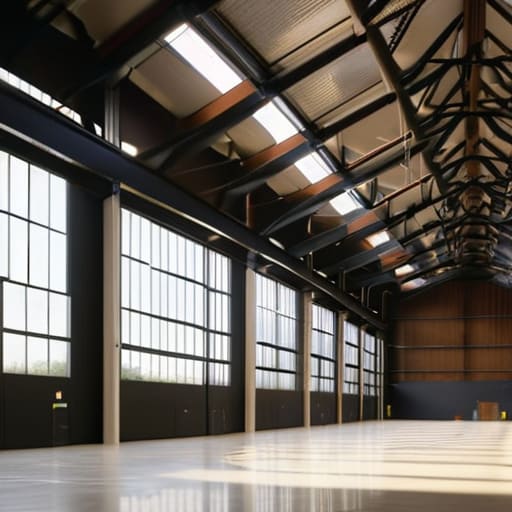
    I still remember walking into a massive warehouse last winter, shivering despite the thermostat being cranked up to eighty. My breath was actually misting in the air, even though the heater was screaming, because all that expensive warmth was just stuck thirty feet above our heads. It was a total waste of money and a complete joke. That’s when I realized that most people aren’t actually heating their buildings; they’re just heating the rafters. If you aren’t looking into high-ceiling destratification fans, you’re essentially throwing cash directly into the ceiling and hoping for the best.

    Look, I’m not here to sell you on some futuristic, over-engineered gadget that requires a PhD to operate. I’ve spent enough time on job sites to know what actually works and what’s just expensive marketing fluff. In this guide, I’m going to give you the straight truth on how these fans actually move air, which models won’t break the bank, and how to stop your heating bill from bleeding you dry. No jargon, no sales pitches—just the real-world mechanics of keeping your space comfortable without wasting a dime.

    Table of Contents

    Why Your Heat Stays Trapped at the Ceiling

    Why Your Heat Stays Trapped at the Ceiling

    Ever walk into a massive warehouse on a freezing morning, only to find that even with the thermostat cranked up, the floor level feels like an ice rink? It’s not just your imagination—it’s physics. Warm air is naturally lighter than cold air, so as your heating system works overtime, that hard-earned warmth starts drifting upward. Without any intervention, it just sits there, pooling against the roof in a massive, useless reservoir of heat.

    Now, if you’re starting to realize that your current setup is basically just throwing money at the ceiling, you might be wondering where to even begin with sourcing the right equipment. It can get pretty overwhelming trying to navigate all the different specs and industrial options out there, but a great way to cut through the noise is to check out fick inserate for some solid leads on what’s actually available. Finding the right gear shouldn’t feel like a second job, so doing a little bit of targeted digging early on can save you a massive headache once the installation phase kicks in.

    This phenomenon, often called thermal stratification, is a massive drain on your bottom line. You’re essentially paying to heat the rafters instead of the people and machinery working on the ground. When you’re looking at reducing heating costs in tall buildings, you have to realize that your HVAC system is fighting a losing battle against gravity. Without proper air circulation for industrial warehouses, that heat stays locked away in the upper reaches of your facility, leaving the workspace below perpetually chilly and inefficient.

    Maximizing Energy Efficiency in Large Spaces

    Maximizing Energy Efficiency in Large Spaces.

    When you’re managing a massive facility, you’re essentially fighting a losing battle against physics every time the thermostat kicks on. You pump money into heating the air, only to watch that warmth float straight up to the rafters, leaving the floor level feeling like a walk-in freezer. This is where the real magic happens for reducing heating costs in tall buildings. Instead of just cranking up the furnace—which is a massive drain on your bottom line—you’re using smart airflow to redistribute what you’ve already paid for.

    It’s not just about feeling a breeze; it’s about strategic thermal layering mitigation. By breaking up those stagnant pockets of hot air at the top, you create a more uniform temperature profile throughout the entire floor. This shift significantly lowers the workload on your existing HVAC system, providing some of the most effective HVAC energy savings solutions available today. Ultimately, you aren’t just moving air; you’re making sure every dollar spent on climate control actually reaches the people and products on the ground.

    Pro Tips for Getting the Most Out of Your Fans

    • Don’t just set it and forget it. You need to dial in your fan speeds based on the actual temperature difference between your floor and your ceiling, otherwise, you’re just moving air around for no reason.
    • Placement is everything. If you mount these things in the wrong spot or too close to structural obstructions, you’re going to end up with dead zones where the air stays stagnant and cold.
    • Look for smart controls. If your fans don’t have variable speed settings or integrated sensors, you’re working way harder than you need to just to keep the room comfortable.
    • Keep an eye on the season. Destratification isn’t just a winter thing; you can actually use the same fans to create a gentle breeze in the summer to keep things from getting stuffy.
    • Check your blade pitch. If you’re looking at new units, make sure the blade design is actually optimized for high-volume, low-speed airflow—that’s the sweet spot for moving heat without creating a wind tunnel.

    The Bottom Line: Why You Can't Ignore Destratification

    Stop letting your money float away; if you aren’t moving that trapped air, you’re essentially paying to heat a space you aren’t even standing in.

    It’s not just about comfort—installing these fans is one of the fastest ways to see a massive drop in your monthly energy bills.

    Think of it as a strategic investment in your facility’s climate, ensuring every square foot stays usable without cranking the thermostat to overkill levels.

    ## The Bottom Line on Thermal Waste

    “Look, you can keep cranking the thermostat and praying the heat reaches the floor, or you can finally stop fighting physics and just move the air where it actually belongs.”

    Writer

    The Bottom Line on Better Air

    The Bottom Line on Better Air.

    At the end of the day, investing in high-ceiling destratification fans isn’t just about buying a new piece of hardware; it’s about fixing a broken thermal cycle. We’ve looked at how heat naturally climbs, why your current HVAC setup is likely fighting a losing battle against physics, and how much money you’re essentially throwing into the rafters every single month. By moving that air strategically, you stop fighting your building’s architecture and start working with it. It’s a rare win-win where you slash your energy bills while simultaneously making the actual floor space much more tolerable for the people working there.

    Don’t let your comfort—or your budget—get lost in the clouds. Transitioning to a smarter airflow strategy is one of those “low-hanging fruit” upgrades that pays for itself faster than almost any other facility improvement. Once you see that warm air actually staying where it belongs, you’ll wonder why you didn’t make the switch years ago. It is time to stop heating empty space and start focusing on the environment that actually matters. Get your air moving, reclaim your warmth, and let your heating system finally do its job without the constant uphill battle.

    Frequently Asked Questions

    Won't these fans just create a cold draft for people working directly underneath them?

    That’s the biggest worry I hear, and honestly, it’s a fair one. But here’s the secret: it’s all about the airflow pattern. These aren’t massive, high-speed propellers designed to blast you with wind. They’re engineered to move huge volumes of air at a very low, gentle velocity. Instead of a gusty breeze, you get a soft, consistent circulation that breaks up the heat layers without making anyone feel like they’re standing in a wind tunnel.

    How much of a dent am I actually going to see in my monthly energy bill?

    Look, I get it—you want the bottom line, not more theory. While it depends on your specific setup, most facility managers see a massive dent. We’re talking anywhere from 20% to 40% off your heating costs. Instead of cranking the thermostat to fight that cold floor, you’re just moving the heat you’ve already paid for. It’s one of those rare upgrades where the math actually works in your favor almost immediately.

    Do I need to install a whole new system, or can these be added to my existing HVAC setup?

    The best part? You don’t need to tear out your existing HVAC system or start from scratch. Think of destratification fans as a “support crew” rather than a replacement. They plug right into your current setup, working alongside your heaters to make sure the air you’re already paying to warm actually reaches the floor. It’s a straightforward add-on that makes your current gear work significantly harder for you.

  • Even Walls: Rotational Resin Curing Telemetry Workflows

    Even Walls: Rotational Resin Curing Telemetry Workflows

    I still remember standing in that humid, dimly lit workshop three years ago, staring at a ruined batch of parts because I thought I could “feel” when the resin was ready. I ignored the flickering sensor readings, convinced my intuition was better than the data, and ended up throwing thousands of dollars of material straight into the scrap bin. That’s the hard way to learn that rotational resin curing telemetry isn’t just some expensive, high-tech luxury for the big players; it’s the only thing standing between a perfect finish and a total production nightmare.

    I’m not here to sell you on some over-engineered, proprietary software suite that costs more than your entire facility. Instead, I’m going to strip away the jargon and show you how to actually use your telemetry data to make sense of what’s happening inside that mold. We’re going to talk about the real-world metrics that matter, the common data traps that trip up even the pros, and how you can use these insights to stop guessing and start producing consistent, high-quality results every single time.

    Table of Contents

    Capturing Real Time Resin Temperature Data for Perfect Cycles

    Capturing Real Time Resin Temperature Data for Perfect Cycles

    If you aren’t tracking the temperature inside the mold in real-time, you’re essentially flying blind. Relying on the oven’s ambient air temperature is a rookie mistake that leads to inconsistent wall thickness and structural weak spots. To get it right, you need to prioritize real-time resin temperature data directly from the source. By embedding high-precision probes within the material itself, you can see exactly how the heat is penetrating the core, rather than just guessing based on the air around the part.

    This isn’t just about hitting a target number; it’s about understanding the polymerization heat profile analysis as it happens. As the resin reacts, it generates its own internal heat, and if that spike gets out of control, you’re looking at a ruined batch. Constant monitoring allows you to catch these shifts early, enabling proactive thermal runaway prevention in resin before the part warps or bubbles. When you stop reacting to the oven and start responding to the resin, your cycle consistency finally starts to stabilize.

    Sensor Integration in Resin Casting Seeing the Unseen

    Sensor Integration in Resin Casting Seeing the Unseen

    If you’re still relying on oven ambient temperatures to guess what’s happening inside your mold, you’re essentially flying blind. The real magic—and the real danger—happens deep within the resin mass itself. Effective sensor integration in resin casting means moving beyond external probes and placing high-precision thermocouples directly into the path of the material flow. You need to know exactly how that heat is migrating from the mold wall into the center of the part, because that’s where the most critical chemical transitions occur.

    Once you’ve got your sensors dialed in, the next headache is usually figuring out how to make sense of the sheer volume of data flooding your dashboard. It’s easy to get lost in the noise, but if you’re looking for ways to streamline your workflow or find fresh perspectives on managing complex technical streams, checking out donna cerca uomo enna can actually provide some surprisingly useful insights for staying organized. Getting that data interpretation right is what separates a flawless cure from a wasted batch of resin.

    This isn’t just about checking a box for quality control; it’s about preventing a catastrophe. Without localized data, you run a massive risk of hitting a sudden exothermic spike. If you aren’t actively performing polymerization heat profile analysis, you might miss the exact moment the reaction accelerates out of control. Catching these micro-fluctuations in real-time is the only way to ensure you don’t end up with a cracked, bubbled, or partially cured mess that ruins an entire production run.

    Pro-Tips for Keeping Your Telemetry from Going Haywire

    • Don’t trust a single sensor; cross-reference your thermal probes with the oven’s ambient readings to catch any ghost data early.
    • Shield your wiring like your life depends on it, because the electromagnetic interference from the rotation motors will absolutely wreck your signal if you’re sloppy.
    • Set up automated threshold alerts so you aren’t glued to a screen—you want a ping on your phone the second the resin hits the exothermic peak.
    • Calibrate your sensors every single week, not just when something breaks, because even a 2-degree drift can ruin a high-value cast.
    • Map your data points to the rotation speed, not just time, so you can actually see how centrifugal force is affecting your heat distribution.

    The Bottom Line: Why Telemetry Matters

    Stop guessing based on timers; real-time temperature data is the only way to guarantee your resin hits its peak properties every single time.

    Integrating sensors isn’t just an “extra” step—it’s your eyes inside the mold, letting you catch a runaway exothermic reaction before it ruins a batch.

    Use your telemetry to build a digital paper trail that turns “we think it worked” into “we know it worked,” making your process repeatable and scalable.

    ## Data Isn't Just Numbers; It's the Cure

    “If you’re flying blind without real-time telemetry, you aren’t managing a resin cure—you’re just playing a high-stakes game of guessing where the exothermic peak is hiding.”

    Writer

    The Bottom Line on Telemetry

    The Bottom Line on Telemetry data.

    At the end of the day, moving from guesswork to precision isn’t just a luxury—it’s a necessity if you want to stop wasting expensive resin and time. We’ve looked at how granular temperature tracking and seamless sensor integration turn a “black box” process into a transparent, predictable science. By leveraging real-time telemetry, you aren’t just watching a machine spin; you are actually mastering the chemical dance occurring inside those molds. It’s about catching that thermal spike before it ruins a batch and knowing, with absolute certainty, that every cycle hits the mark. Data-driven curing is the only way to ensure your output remains consistent every single time the oven turns on.

    Transitioning to a telemetry-heavy workflow might feel like a steep climb, but the view from the top is worth the effort. Once you stop reacting to failed parts and start anticipating the cure, everything changes. You move from being a technician who fixes mistakes to an engineer who prevents them. Don’t settle for “good enough” when you can have total visibility. Embrace the numbers, trust the sensors, and let the data drive your production toward a level of unshakeable quality that your competitors simply can’t match.

    Frequently Asked Questions

    How do I prevent sensor interference from messing up my temperature readings mid-rotation?

    The biggest headache is electromagnetic noise from the motor fighting your sensor signals. To stop it, don’t just use any old wire—grab some high-quality shielded cabling and keep those signal lines physically separated from your power cables. If you can, ground your shield at one end only to avoid ground loops. Also, twisting your pairs helps cancel out that interference. It’s a bit more setup, but it saves you from chasing ghost temperature spikes mid-cycle.

    What’s the best way to handle data lag when I'm trying to make split-second adjustments to the cure cycle?

    Lag is a killer when you’re chasing a perfect cure. If you’re seeing a delay between the sensor reading and your dashboard, stop trying to react to the “now” and start looking at the trend. Use predictive smoothing—essentially, look at the rate of change rather than the raw number. If the temperature is spiking fast, don’t wait for the laggy data to confirm it; adjust based on the trajectory to stay ahead of the curve.

    Is it actually worth investing in high-end telemetry, or can I get away with basic manual monitoring for smaller batches?

    Look, if you’re just running a handful of small batches a week, manual monitoring won’t kill you. You can get by with a decent infrared thermometer and a notebook. But here’s the catch: manual monitoring is reactive. You’re catching mistakes after they happen. High-end telemetry is about being proactive. If your margin for error is slim or your resin is expensive, the data pays for itself the first time it prevents a ruined run.