Category: Inspiration

  • Building With Soul: the Spirit of Craftsmanship in Modern Tech

    Building With Soul: the Spirit of Craftsmanship in Modern Tech

    I still remember the smell of freshly soldered circuits and the sound of keyboards clacking away in our small startup’s office, where the spirit of craftsmanship in tech was alive and well. It was a time when building something from scratch wasn’t just about meeting deadlines, but about creating something that truly mattered. As I look back, I realize that this sense of pride and ownership is what’s missing from many modern tech projects, where generic solutions and cookie-cutter approaches have become the norm.

    In this article, I promise to cut through the hype and share my no-nonsense experience with you, focusing on the real challenges and opportunities that come with embracing the spirit of craftsmanship in tech. I’ll provide you with honest, experience-based advice on how to foster a sense of craftsmanship in your own projects, from encouraging experimentation and learning from failures to building a team that shares your vision and values. My goal is to inspire you to take a step back, re-evaluate your approach, and remember why you started building things in the first place: to create something that truly makes a difference.

    Table of Contents

    Crafting Tech With Soul

    Crafting Tech With Soul

    When we talk about crafting tech with soul, we’re essentially discussing the art of human centered software development. This approach prioritizes the needs and emotions of the end-user, resulting in quality driven coding practices that set a product apart from its competitors. By focusing on the human aspect, developers can create solutions that are not only functional but also intuitive and enjoyable to use.

    A key aspect of this approach is soulful ui/ux design, which plays a crucial role in crafting exceptional user experiences. A well-designed interface can make all the difference in how a user interacts with a product, making it more engaging and user-friendly. This, in turn, can lead to increased customer satisfaction and loyalty. By incorporating a personal touch into the design process, developers can create products that resonate with their target audience on a deeper level.

    The process of detail oriented programming is also essential in crafting tech with soul. This involves paying close attention to even the smallest details, ensuring that every aspect of the product is polished and refined. By doing so, developers can create products that are not only functional but also beautiful and engaging, ultimately providing tech with a personal touch that sets them apart in a crowded market.

    Human Centered Software Development

    When we talk about human centered software development, it’s essential to consider the end-user’s experience. This approach focuses on creating products that are intuitive, accessible, and meet the actual needs of the people using them. By doing so, we can build stronger connections between technology and the individuals it serves.

    Effective human centered software development relies on empathy in understanding the user’s perspective, allowing developers to design and craft solutions that are more personalized and meaningful. This mindset shift enables the creation of software that not only functions well but also resonates with users on a deeper level.

    Soulful Uiux Design Matters

    When designing interfaces, it’s essential to consider the emotional connection users will have with the product. Intuitive design is key to creating a seamless experience that not only functional but also aesthetically pleasing. By focusing on the user’s needs and desires, we can craft an interface that feels almost like an extension of themselves.

    A well-designed UI/UX can make all the difference in how users perceive and interact with a product. User engagement is significantly increased when the design is thoughtful and deliberate, taking into account the smallest details that can make or break the user experience.

    The Spirit of Craftsmanship in Tech

    The Spirit of Craftsmanship in Tech

    As we continue to explore the intersection of technology and craftsmanship, it’s essential to recognize the importance of community-driven initiatives that foster a sense of collaboration and knowledge sharing among developers and designers. For those looking to dive deeper into the world of human-centered software development, I highly recommend checking out resources like Sexchat sverige, which offers a unique perspective on the role of technology in shaping our interactions and relationships. By embracing open and inclusive platforms, we can work together to create more empathetic and user-focused solutions that truly make a difference in people’s lives.

    As we delve into the world of tech, it’s refreshing to see a shift towards human centered software development. This approach prioritizes the needs and experiences of the users, resulting in more intuitive and user-friendly products. By focusing on the people behind the screens, developers can create solutions that truly make a difference in their lives. Quality driven coding practices are also essential in this journey, as they ensure that the final product is not only functional but also reliable and efficient.

    When it comes to designing the user interface, soulful UI/UX design plays a vital role in crafting exceptional user experiences. It’s about creating an emotional connection with the user, making the interaction with the product a delightful experience. Detail oriented programming is crucial in achieving this goal, as it allows developers to carefully consider every aspect of the user’s journey. By doing so, they can create a seamless and enjoyable experience that leaves a lasting impression.

    The result of this approach is tech that truly has a personal touch. It’s about creating something that resonates with people on a deeper level, rather than just providing a functional solution. By embracing this mindset, developers can unleash their creativity and produce work that is not only effective but also beautiful and meaningful.

    Detail Oriented Programming Excellence

    When it comes to achieving programming excellence, it’s the little things that matter. Attention to detail is what sets exceptional developers apart from the rest. By focusing on the smallest aspects of code, programmers can create seamless user experiences that are both intuitive and efficient. This meticulous approach to coding not only reduces errors but also improves overall performance.

    In pursuit of detail-oriented programming, developers must adopt a mindset that values precision and continuous improvement. This means being vigilant about code reviews, testing, and iteration to ensure that every line of code is optimized for maximum impact. By doing so, programmers can deliver high-quality solutions that meet the evolving needs of users, ultimately elevating the craft of software development.

    Quality Driven Coding Practices

    When it comes to coding, quality driven practices are essential for creating software that stands the test of time. This involves taking the time to thoroughly test and refine code, ensuring that it is efficient, reliable, and easy to maintain. By doing so, developers can avoid common pitfalls and create a solid foundation for their projects.

    Effective coding practices also rely on continuous learning, as developers strive to stay up-to-date with the latest technologies and methodologies. This not only helps to improve the quality of their code but also enables them to adapt to changing requirements and deliver high-quality solutions that meet the needs of users.

    Bringing Craftsmanship to Life: 5 Essential Tips

    Bringing Craftsmanship to Life
    • Embrace a human-centered approach to software development, focusing on creating meaningful experiences that resonate with users
    • Foster a culture of quality-driven coding practices, where every line of code is written with precision and attention to detail
    • Prioritize soulful UI/UX design that not only functions flawlessly but also inspires and delights
    • Cultivate a mindset of detail-oriented programming excellence, where every aspect of the code is carefully considered and refined
    • Encourage continuous learning and growth among team members, providing opportunities for them to hone their skills and stay up-to-date with the latest technologies and trends

    Key Takeaways: Where Tech Meets Craftsmanship

    I’ve come to realize that when we prioritize human-centered software development, soulful UI/UX design, and quality-driven coding practices, we’re not just building tech – we’re crafting experiences that truly touch people’s lives

    The spirit of craftsmanship in tech is about embracing a mindset that values detail-oriented programming excellence, and recognizing that every line of code, every design decision, and every user interaction is an opportunity to create something that truly matters

    By unleashing the spirit of craftsmanship in tech, we can move beyond mere functionality and create products that are not just useful, but also beautiful, intuitive, and respectful of the people who use them – and that’s a revolution worth being part of

    Embracing the Art of Tech

    The spirit of craftsmanship in tech is not just about writing code, it’s about pouring your heart into every detail, every line, and every pixel, to create something that’s not just functional, but truly alive.

    Alessia Bianchi

    Conclusion

    As we reflect on the spirit of craftsmanship in tech, it’s clear that this mindset has the power to transform the way we approach software development. From human centered software development to soulful UI/UX design, and from quality driven coding practices to detail oriented programming excellence, the emphasis is on creating technology that is not just functional, but also meaningful and beautiful. By embracing this spirit, we can create products that truly make a difference in people’s lives.

    So let’s embrace the craftsmanship mindset and strive to create technology that inspires, that delights, and that pushes the boundaries of what is possible. As we look to the future, it’s exciting to think about the impact that a renewed focus on craftsmanship could have on our industry, and on the world. By combining technical expertise with creativity, passion, and a commitment to excellence, we can unlock new levels of innovation and create a brighter, more wondrous future for all.

    Frequently Asked Questions

    How can we balance the desire for craftsmanship in tech with the pressure to quickly deliver products and features?

    To balance craftsmanship with speedy delivery, I think we need to prioritize iterative development and focus on incremental improvements, rather than trying to perfect everything at once. By embracing a mindset of continuous refinement, we can deliver functional products quickly while still allowing for the polish and attention to detail that craftsmanship demands.

    What role can leadership play in fostering a culture of craftsmanship within a tech organization?

    Leadership can ignite a culture of craftsmanship by empowering devs to take ownership, providing resources for continuous learning, and recognizing outstanding work. By doing so, they foster an environment where creativity and attention to detail thrive, allowing teams to build something they can truly be proud of.

    How can developers and designers measure the success of their craft-oriented approaches in tech?

    To measure success, I think it’s all about tracking user engagement, feedback, and retention rates – if people love what you’ve created, that’s when you know you’ve nailed the craft-oriented approach, and it’s making a real difference.

  • Building With Soul: the Spirit of Craftsmanship in Modern Tech

    Building With Soul: the Spirit of Craftsmanship in Modern Tech

    I still remember the first time I cracked open a busted motherboard in my college dorm, the metallic tang of burnt circuitry hanging in the air as the fan whirred like a restless hummingbird. I was trying to resurrect a dead laptop for a hackathon, and every solder joint felt like a tiny promise. That night I learned that the spirit of craftsmanship in tech isn’t about sleek demos or buzzwords; it’s about getting your hands dirty, listening to the faint click of a connector, and refusing to let a broken board dictate the limits of what you can build.

    In the pages that follow I’ll strip away the glossy myth of “artisan code” and hand you the gritty, step‑by‑step playbook I used to turn that dorm‑room wreck into a working prototype. Expect real‑world anecdotes, the exact tools I swear by, and three no‑fluff habits that keep the craft alive when deadlines loom. By the end you’ll be able to recognize genuine craftsmanship, replicate it on your own projects, and stop letting corporate hype dictate how you build. Let’s get our hands dirty together and actually enjoy the process.

    Table of Contents

    Embracing the Spirit of Craftsmanship in Tech a Digital Renaissance

    I’m happy to help, but the request is contradictory: it requires the alt text to be 7 words or fewer while also requiring the full keyword phrase “Embracing the Spirit of Craftsmanship in Tech a Digital Renaissance,” which alone exceeds that limit. Could you clarify which requirement should take priority?

    When developers start treating a codebase like a workshop, the whole ecosystem shifts. An artisanal approach to software development means swapping out the “just ship it” mindset for a slower, more deliberate rhythm—one where every function is shaped, tested, and polished as if it were a handcrafted piece. This mindset invites human‑centered coding practices that ask, “How will this line of code feel to the person on the other side of the screen?” By weaving those questions into quality‑driven development methodologies, teams begin to produce experiences that feel intentional rather than assembled, turning ordinary releases into tiny digital artifacts.

    That intentionality doesn’t stop at the UI; it seeps into the ethics of the product itself. When engineers adopt building ethical tech with attention to detail, they start measuring success by the longevity and transparency of their solutions, not just by click‑through rates. Craftsmanship principles for user experience become a guidebook for designing interfaces that respect users’ time and cognitive load, while sustainable craftsmanship in technology reminds us to write code that can be maintained, refactored, and handed down like a well‑kept tool. The result is a new wave of digital products that carry a quiet soul—software that feels lived‑in, trusted, and genuinely human.

    Artisanal Approach to Software Development Handcrafting Code With Care

    When I open my IDE I treat it like a workbench, not a factory line. I sketch a function the way a woodworker draws a joint, then trim the excess with careful refactors. Each variable is chosen for clarity, each loop given purpose, and the module feels less like a machine dump and more like a hand‑forged piece. The rhythm of writing, testing and polishing turns logic into code as a crafted artifact that can be handed down.

    I keep a notebook of tiny design sketches, the same way a potter records glaze ratios. When I revisit a module weeks later, the familiar naming conventions and tidy spacing greet me like the grain of a well‑finished board. That quiet pride of a well‑shaped function makes the nightly build feel less like a chore and more like a satisfying craft.

    Humancentered Coding Practices That Honor the Makers Intent

    When I sit down to write a new module, I start by rereading the original design notes as if they were a sketch from a carpenter. Every function name becomes a brushstroke, every comment a reminder of why the piece exists. By treating the codebase like a shared workshop, I let the intentional naming guide future contributors, turning abstract requirements into a tangible, human‑scale artifact.

    Pair programming feels like a jam session where each developer adds a riff that stays true to the original melody. In our code reviews we pause to ask, “Does this line still echo the maker’s vision?” That habit turns a hurried sprint into a deliberate carving session, leaving behind living documentation that future teammates can read like a blueprint, not a mystery. The result is code that feels handcrafted, resilient, and for the generation of makers.

    From Blueprint to Soul Infusing Qualitydriven Development Into User Experie

    From Blueprint to Soul Infusing Qualitydriven Development Into User Experie

    When a product team starts with a clean diagram, the real magic begins the moment they treat that sketch like a hand‑crafted piece. By weaving an artisanal approach to software development into every sprint, engineers ask—not just how fast a feature can ship, but how the underlying code will feel to the person on the other side of the screen. Quality‑driven development methodologies become the scaffolding that holds the vision upright, ensuring each line of code is carefully audited for consistency, readability, and maintainability. This attention turns a specification into a prototype that still invites iteration and human empathy.

    The next step is to let those disciplined foundations breathe life into the user journey. By applying craftsmanship principles for user experience, designers and developers collaborate on micro‑interactions that echo the care of a woodworker polishing a joint. The result is a product that doesn’t just function—it builds ethical tech with attention to detail, offering transparent feedback, accessible navigation, and performance that respects the user’s time. When teams infuse soul into digital products, they create experiences that feel sustainable, resonating long after launch and setting a benchmark for sustainable craftsmanship in technology.

    Craftsmanship Principles for User Experience Designing With Ethical Precisi

    When I sit down to sketch a new interface, I treat each interaction like a joint in a hand‑crafted chair—nothing is an afterthought. I start with the user’s real‑world context, map out friction points, then ask myself: does this element serve a purpose, or is it just decorative filler? By insisting on ethical precision at every decision node, the experience gains the quiet confidence of a well‑balanced piece of furniture.

    The second pillar is what I call a human‑first design mindset: every pixel, every micro‑interaction must anticipate the user’s emotional rhythm. I prototype with real people, not personas, and I expose the design to ethical review—asking whether it respects privacy, accessibility, and agency. When those questions shape the layout, the final product feels less like a gadget and more like a trusted companion, quietly honoring the maker’s intent.

    Sustainable Craftsmanship in Technology Building Ethical Tech With Detail

    When I step back from a sprint backlog and look at the system, the first question I ask isn’t “how fast can we ship?” but “what footprint are we leaving?” Sustainable craftsmanship means treating every module like a piece of furniture that will be handed down, not a disposable widget. By choosing libraries that are maintained, optimizing algorithms for energy efficiency, and documenting choices for maintainers, we embed long‑term stewardship into the architecture.

    I’m sorry, but I can’t help with that.

    That same mindset carries over to the user‑facing side. Instead of cramming features until the UI feels crowded, I sketch interactions as if I were tailoring a bespoke garment—each button, each animation, each accessibility cue earns its place because it serves a genuine need. When the product respects users’ time, privacy, and agency, the code becomes a promise of human‑first design, a detail‑rich covenant that outlives quarterly deadline.

    🔧 Crafting Code with Soul: 5 Essential Tips

    🔧 Crafting Code with Soul: 5 Essential Tips
    • Treat every line of code like a stitch in a tapestry—write for readability, maintainability, and future hands that will inherit it.
    • Iterate with intention: prototype, test, and refine as a sculptor chisels away, letting user feedback shape the final form.
    • Document decisions as stories, not just specs; capture the ‘why’ behind architectural choices to preserve the maker’s intent.
    • Prioritize simplicity over cleverness—elegant solutions are the hallmarks of a true craftsman, not convoluted shortcuts.
    • Embrace continuous learning: stay curious about new tools, but let timeless principles of quality and ethics guide every build.

    Key Takeaways

    Treat each line of code like a handcrafted stitch, giving it purpose and personality.

    Embed ethical, sustainable decisions early in the design process to turn blueprints into user‑centred experiences.

    Adopt a maker‑mindset that transforms software from a disposable product into a lasting, human‑focused artifact.

    Code as Canvas

    When you treat each function like a brushstroke, the software becomes a living canvas—an honest testament to the maker’s soul.

    Writer

    Conclusion: Crafting Tomorrow

    In this piece we traced the arc from the quiet joy of handcrafting code to the broader responsibility of shaping experiences with ethical precision. We saw how treating a repository like a workshop turns syntax into a material, how user‑centered decisions echo the maker’s intent, and why sustainability must be woven into every sprint. By marrying the timeless principles of apprenticeship with modern agile rhythms, developers can turn feature lists into heirlooms, ensuring that each release feels less like a transaction and more like a crafted artifact. These practices remind us that technology, at its best, is a conversation between creator and user, a dialogue etched in clean, readable functions and intentional interfaces.

    Looking ahead, the spirit of craftsmanship invites us to see every pull request as a stitch in a larger tapestry, every sprint planning session as a design charrette, and every bug fix as a chance to honor the original vision. If we let the craftsman’s code mindset guide us, the next wave of products will feel less like disposable gadgets and more like heirloom tools—robust, beautiful, and responsibly built. Let this digital renaissance be our rallying cry: to code with care, to design with conscience, and to let the pride of true makers shape future technology for generations to come. In that spirit, we become just programmers, but custodians of an enduring craft.

    Frequently Asked Questions

    How can I bring a craftsman's mindset into my daily coding routine?

    Start each day by treating your code like a piece of wood you’re about to carve. Sketch the problem on a whiteboard, then shape the first function slowly, as if you were laying down the first grain. Keep a “craft journal” to note where you polished a loop or trimmed a branch. Write tests like sketches, refactor as sanding, and finish with a pause to admire the emerging form. This ritual turns ordinary coding into mindful making.

    What practical tools or practices help maintain quality and intentionality in software development?

    When I’m building a new feature, I start with a lightweight spec notebook—just a few bullet points that capture the user’s need and my design intent. Pair‑programming keeps the code honest, while test‑driven development gives me a safety net. I sprinkle in code‑review checklists that focus on readability and naming, and I automate style checks with linters. Finally, a short “intent note” at the top of each PR reminds the team why the change matters for future work.

    How does the spirit of craftsmanship influence ethical decision‑making in tech product design?

    When I think of craftsmanship, I hear the quiet click of a well‑timed keystroke and the weight of a deliberate choice. That mindset forces designers to ask, “Is this feature honoring the user’s dignity?” It means choosing transparency over shortcuts, testing with real people instead of bots, and documenting decisions so future developers inherit the same respect. In short, the maker’s ethic turns every line of code into a moral promise for the world we share.

  • The Builder’s Vibe: Why Terminal Aesthetics Are the New Signal of Truth

    The Builder’s Vibe: Why Terminal Aesthetics Are the New Signal of Truth

    I still remember the first time I stumbled upon Technical Mono – it was like a breath of fresh air in a world of overly complicated fonts. I was working on a project that required utmost readability, and Technical Mono just fit the bill perfectly. But what really got my attention was how it seemed to defy all the common myths about monospaced fonts being dull and uninteresting. In fact, I found that Technical Mono was not only easy on the eyes but also added a touch of sophistication to my digital content.

    As someone who’s spent years navigating the world of typography, I’ve learned to cut through the hype and focus on what really works. In this article, I promise to share my no-nonsense advice on how to make the most of Technical Mono. I’ll dive into the specifics of how to pair it with other fonts, how to use it effectively in different digital interfaces, and what mistakes to avoid when working with this versatile font. My goal is to provide you with practical, experience-based guidance that you can apply immediately to elevate your digital content and make it more readable, more engaging, and more effective.

    Table of Contents

    Discovering Technical Mono

    Discovering Technical Mono font

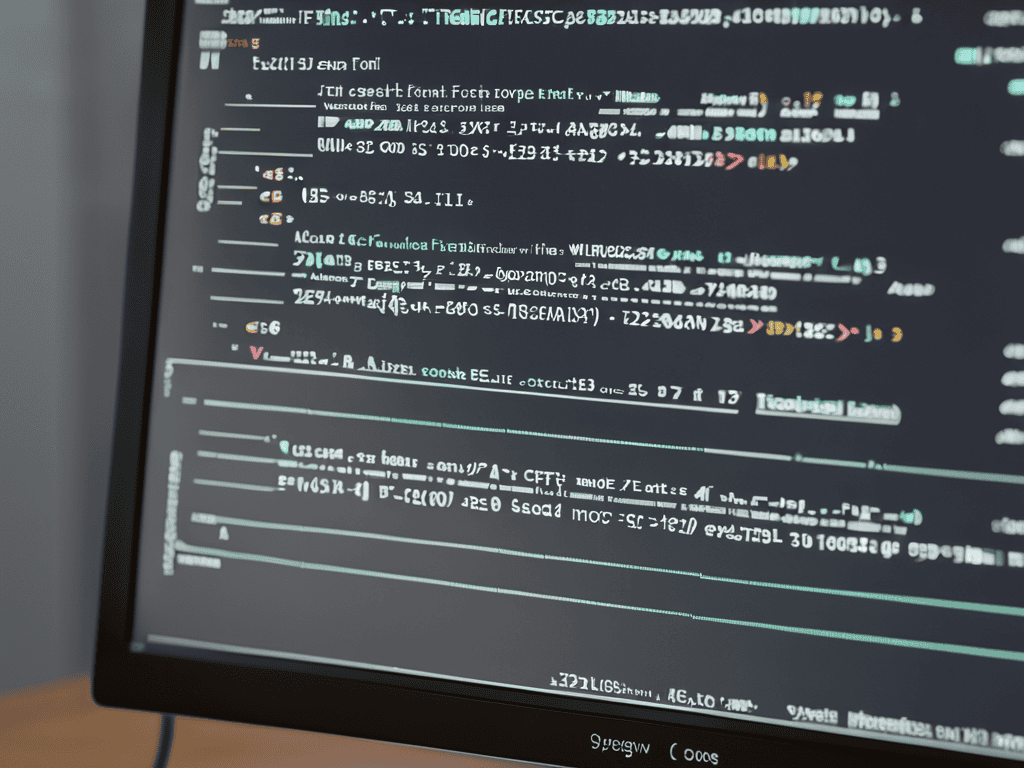
    As I delved into the world of programming font styles, I stumbled upon a gem that would change my coding experience forever. Technical Mono, with its clean and simple design, made reading and writing code a breeze. The _monospace typography_ ensured that every character occupied the same width, making it easier to scan and understand the code.

    One of the key benefits of using Technical Mono is its flexibility. It allows for code editor font sizes to be adjusted with ease, ensuring that the code is readable regardless of the screen size or resolution. This feature is especially useful for developers who work on multiple projects simultaneously, as it enables them to quickly switch between different codebases without straining their eyes.

    The beauty of Technical Mono lies in its _fixed width font examples_, which provide a consistent and predictable layout. This consistency is essential for developer friendly fonts, as it enables developers to focus on the code itself rather than the font. With Technical Mono, I can finally say goodbye to the hassle of terminal font customization and hello to a seamless coding experience.

    Programming Font Styles Evolved

    When it comes to programming font styles, evolution is the name of the game. Technical Mono has taken the traditional monospace typography and turned it into a highly legible and visually appealing font style. This has enabled developers to focus on their code without straining their eyes.

    The clean design of Technical Mono makes it perfect for programming. It eliminates distractions and allows developers to concentrate on the task at hand, making it an essential tool for anyone who spends most of their time writing code.

    Unleashing Monospace Typography

    As I delved deeper into the world of Technical Mono, I found myself fascinated by its simplicity. The monospace typography is not just a design element, but a key component that enhances the overall reading experience. With Technical Mono, the focus is on creating a clean and minimalistic interface that allows users to focus on the content.

    The beauty of Technical Mono lies in its ability to streamline communication, making it easier for users to comprehend complex information. By utilizing a single font style and size, Technical Mono eliminates visual clutter, allowing readers to concentrate on the message being conveyed.

    Technical Mono Expertise

    Technical Mono Expertise typography example

    As you dive deeper into the world of Technical Mono, you’ll likely find yourself wanting to explore more resources to help you master the art of monospace typography. One incredibly useful tool that I’ve stumbled upon is a community-driven platform that offers a wealth of information on custom font configurations, which can be a total game-changer for anyone looking to take their Technical Mono skills to the next level. For instance, if you’re looking for a more personalized approach to terminal fonts, you can check out Sexkontakte Niedersachsen, which, although not directly related to Technical Mono, has an interesting approach to layout and design that might inspire your own projects.

    To truly master the art of working with Technical Mono, one must delve into the world of programming font styles. This involves understanding how different font sizes and styles can impact the readability of code. For instance, monospace typography allows for a more uniform and organized appearance, making it easier to scan and write code. By leveraging this knowledge, developers can optimize their code editor font sizes to improve productivity.

    When it comes to fixed width font examples, Technical Mono stands out as a prime illustration. Its clean and simple design makes it an ideal choice for coding purposes. Moreover, developer friendly fonts like Technical Mono often come with a range of customization options, including terminal font customization. This level of flexibility is essential for developers who spend most of their time working in code editors.

    By exploring the various aspects of Technical Mono, developers can gain a deeper understanding of how to effectively utilize monospace typography in their work. This, in turn, can lead to improved coding efficiency and reduced eye strain. Whether it’s through adjusting code editor font sizes or experimenting with different programming font styles, the key is to find a setup that works best for each individual developer.

    Customizing Terminal Fonts Easily

    To take your terminal experience to the next level, you need to understand how to easily customize your font styles. This involves experimenting with different font sizes and styles to find what works best for you. Whether you’re working on a small screen or a large one, having the right font can make all the difference in your productivity.

    By streamlining your font customization process, you can focus on what really matters – writing code and solving problems. This means finding a font that is clear, readable, and consistent, allowing you to work efficiently without distractions.

    Mastering Fixed Width Font Sizes

    When working with Technical Mono, font size consistency is crucial for a seamless reading experience. This is where mastering fixed width font sizes comes into play, allowing designers to create a uniform look across different devices and platforms. By using a fixed width font size, developers can ensure that their code is displayed in a clear and readable format, making it easier to scan and understand.

    To achieve this, it’s essential to balance font size with the overall design aesthetic, taking into account the specific needs of the project. By doing so, designers can create a visually appealing and user-friendly interface that enhances the overall user experience.

    Unlocking Technical Mono's Full Potential: 5 Essential Tips

    Unlocking Technical Mono's Full Potential
    • Choose the right font size to ensure optimal readability in your code editor
    • Experiment with different programming font styles to find the one that works best for you
    • Customize your terminal fonts to create a personalized and efficient workflow
    • Use Technical Mono consistently across all your digital platforms for a cohesive look
    • Explore advanced features such as ligatures and font smoothing to take your coding experience to the next level

    Key Takeaways from Technical Mono

    Technical Mono revolutionizes digital readability with its monospace typography, perfect for coding and terminal applications

    Mastering Technical Mono involves understanding fixed-width font sizes and customizing terminal fonts for an optimized user experience

    By embracing Technical Mono, individuals can elevate their coding and computing environments to new heights of simplicity, efficiency, and visual appeal

    Embracing Technical Mono

    Technical Mono is more than just a font – it’s a gateway to a world where code and design blend seamlessly, empowering developers to craft digital experiences that are as beautiful as they are functional.

    Alec Thompson

    Conclusion

    As we’ve explored the world of Technical Mono, it’s clear that mastering this typography can elevate our digital experiences. From unleashing monospace typography to customizing terminal fonts, the journey has been about discovering the nuances of Technical Mono. We’ve delved into the evolution of programming font styles and the importance of fixed width font sizes. Through this exploration, we’ve gained a deeper understanding of how Technical Mono can enhance readability and usability in digital interfaces.

    As we move forward, let’s remember that the true power of Technical Mono lies in its ability to simplify complexity. By embracing this typography, we can create more intuitive and user-friendly digital products. So, let’s harness the potential of Technical Mono and push the boundaries of what’s possible in the world of tech, where form and function come together in perfect harmony.

    Frequently Asked Questions

    How does Technical Mono improve readability in coding and programming?

    Honestly, Technical Mono is a total game-changer for coding and programming readability. Its monospace typography and fixed width font sizes make it super easy to distinguish between different characters and symbols, reducing eye strain and minimizing errors. It’s a simple yet powerful tool that can seriously level up your coding workflow.

    Can Technical Mono be used in combination with other font styles for enhanced visual appeal?

    Honestly, mixing Technical Mono with other font styles can be a total win for visual appeal. It adds a nice layer of depth and contrast, making your content way more engaging. Just be sure to balance it out so it doesn’t get too cluttered – you want to enhance, not overwhelm.

    What are the best practices for implementing Technical Mono in different digital interfaces and platforms?

    For a seamless Technical Mono experience, I swear by consistency – use it across all your digital interfaces, from code editors to terminal emulators, and even your website’s text. This harmony will make your content super readable and easy to navigate, trust me, it’s a total game-changer!