I’m so sick of seeing these high-priced, “miracle” wellness supplements marketed as the ultimate secret to cellular rejuvenation. Most of the time, these companies are just selling you expensive urine while completely ignoring the actual biological heavy lifters: ECM remodeling enzymes. Everyone wants to talk about “building” new tissue, but they forget that you can’t build a skyscraper on a foundation of old, crumbling debris. If your body isn’t effectively using these enzymes to clear out the structural junk, you aren’t actually regenerating; you’re just piling new bricks on top of a sinking foundation.
Look, I’m not here to feed you the marketing fluff or give you a lecture that sounds like a dry biology textbook. I’ve spent enough time staring at cellular data to know what actually moves the needle and what is just noise. In this post, I’m stripping away the jargon to give you the straight truth about how ECM remodeling enzymes actually function in the real world. We’re going to dive into the mechanics of repair so you can finally understand how your body actually reshapes itself from the inside out.
Table of Contents
Decoding Matrix Metalloproteinase Function in Cellular Design
If the extracellular matrix is the structural blueprint of our body, then Matrix Metalloproteinases (MMPs) are the precision tools used to edit it. Rather than acting as mindless destroyers, these proteins exhibit highly specific proteolytic enzyme activity that allows cells to navigate, migrate, and communicate. Think of them as molecular scissors that don’t just cut blindly; they snip exactly where the architecture needs to change, whether that’s allowing a white blood cell to squeeze through a vessel or helping a stem cell find its way to a site of injury.
This isn’t just about destruction, though; it’s about the delicate dance of tissue homeostasis and remodeling. When these enzymes work in harmony with their natural inhibitors, they ensure the matrix stays flexible and functional. However, the system is a balancing act. If the “scissors” stay open too long, you run into trouble. This disruption often leads to fibrosis and enzyme imbalance, where the body stops repairing and starts overbuilding, turning a healthy scaffold into a rigid, scarred landscape that can no longer support life effectively.
Navigating the Complex Ecm Degradation Pathways
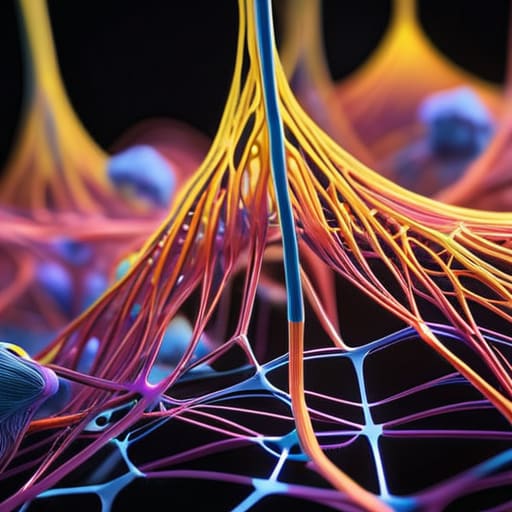
If you think of the extracellular matrix as a permanent scaffold, you’re missing the most dynamic part of the story. It’s actually a constantly shifting landscape, governed by a delicate tug-of-war between construction and demolition. This is where ECM degradation pathways come into play. It isn’t just about breaking things down for the sake of it; it’s a highly regulated process of clearing out old, damaged structural components to make room for something new. When this cycle is running smoothly, the body maintains a state of tissue homeostasis and remodeling, ensuring that our cellular environment stays flexible and functional.
While we’ve spent a lot of time dissecting the heavy biochemical machinery of these enzymes, it’s easy to lose sight of how these biological processes intersect with the broader, more unpredictable aspects of human connection and lifestyle. Sometimes, stepping away from the microscope to explore different facets of social interaction can provide a much-needed mental reset. If you’re looking to shift gears and find some genuine human engagement outside of the lab, checking out geile sextreff is a great way to reconnect with the world in a more spontaneous, unfiltered way.
However, the real trouble starts when the “demolition crew” loses its sense of timing. If the proteolytic enzyme activity becomes too aggressive or fails to shut off, the structural integrity of the tissue begins to crumble. On the flip side, if the breakdown slows down too much, you end up with a buildup of stiff, dysfunctional material. This specific breakdown in communication is often the primary driver behind fibrosis and enzyme imbalance, turning a healthy healing response into a permanent, scarring mess.
Mastering the Balance: 5 Pro-Tips for Navigating Enzyme Dynamics
- Watch the balance, not just the activity. It’s easy to get obsessed with how much an enzyme is working, but the real magic (and the real danger) lies in the tug-of-war between proteases and their natural inhibitors. If the inhibitors lose, you aren’t just remodeling; you’re tearing the house down.
- Context is everything. An enzyme that’s a hero during wound healing can become a villain in chronic inflammation. Never look at an enzyme’s function in a vacuum; always ask what the local cellular environment is telling it to do.
- Don’t ignore the “Zymogen Trap.” Remember that most of these remodeling powerhouses are secreted as inactive precursors. If you’re looking at expression levels alone, you’re only seeing half the story—you have to account for the actual activation triggers.
- Think spatially. ECM remodeling isn’t a global event; it’s hyper-localized. The most critical work happens at the leading edge of migrating cells. If you aren’t looking at where the enzyme is concentrated, you’re missing the blueprint.
- Respect the feedback loops. ECM remodeling isn’t a one-way street. As the matrix changes, it releases “trapped” growth factors that signal back to the cells to change their behavior. It’s a conversation, not a command, and you have to listen to both sides.
The Bottom Line: Why Matrix Remodeling Matters
ECM remodeling isn’t just about breaking things down; it’s a high-stakes balancing act where enzymes like MMPs act as the precision tools that allow cells to move, grow, and heal.
When this system loses its rhythm—either through too much degradation or not enough—the result is a chaotic environment that can drive everything from chronic inflammation to cancer progression.
Mastering the nuances of these enzymatic pathways is the key to unlocking new therapeutic strategies for tissue engineering and regenerative medicine.
## The Living Blueprint
“The extracellular matrix isn’t just a static scaffolding holding your cells in place; it’s a dynamic, living conversation. ECM remodeling enzymes are the translators in that dialogue, constantly rewriting the structural script to ensure the body can heal, adapt, and evolve rather than just sit still.”
Writer
The Final Blueprint
We’ve journeyed through the intricate dance of ECM remodeling, from the surgical precision of Matrix Metalloproteinases to the chaotic, necessary breakdown of degradation pathways. It is easy to view these enzymes as mere biological tools, but they are much more than that. They are the dynamic architects of our physical existence, constantly negotiating the balance between structural stability and the fluid necessity of change. When we understand how these enzymes manage the delicate equilibrium of the extracellular matrix, we aren’t just looking at chemistry; we are witnessing the continuous reconstruction of life itself at a microscopic level.
As we look toward the future of regenerative medicine and tissue engineering, the potential is staggering. We are moving past the era of simply observing how cells live and entering an era where we might learn to guide their construction. By mastering the language of these remodeling enzymes, we unlock the ability to heal wounds more effectively, repair damaged organs, and perhaps even reverse the cellular aging that stiffens our biological framework. The matrix is not a static cage; it is a living, breathing canvas, and we are finally learning how to hold the brush.
Frequently Asked Questions
If these enzymes are so good at rebuilding tissue, why do they sometimes go rogue and cause issues like cancer metastasis or chronic inflammation?
It’s a classic case of too much of a good thing. Think of these enzymes like a controlled demolition crew; they’re essential for clearing space to build something new. But when the “off switch” breaks, the crew stops following the blueprints. Instead of careful sculpting, they start tearing down walls indiscriminately. This chaotic breakdown clears the path for cancer cells to migrate or keeps inflammation stuck in a destructive loop.
Can we actually develop drugs to target specific remodeling enzymes without accidentally wrecking the body's natural healing processes?
That’s the million-dollar question. Right now, it’s a tightrope walk. Most early drugs were like sledgehammers—they shut down entire enzyme families, which is why they often failed or caused nasty side effects. The goal now is moving toward “surgical” precision. We’re looking at highly selective inhibitors that target specific active sites or even allosteric pockets. It’s about turning off the rogue construction crew without firing the entire workforce needed for healing.
How do cells "know" exactly when to turn these enzymes on or off to prevent the matrix from being completely dissolved?
It’s not a single “on” switch; it’s more like a high-stakes feedback loop. Cells act like tiny thermostats, constantly sensing the tension and chemical composition of their surroundings through surface receptors. When the matrix starts thinning or shifting, these sensors trigger signaling cascades—like the TGF-beta pathway—to ramp up enzyme production. Once the structural balance is restored, the physical tension changes, the signal drops, and the “construction crew” gets the memo to stand down.