I still remember sitting in a bustling coffee shop, surrounded by the gentle hum of conversations and the aroma of freshly brewed coffee, yet feeling a deep sense of loneliness. It’s a paradox that has puzzled me for a while, and one that I believe is at the heart of The Loneliness of Third Places. We’re often told that these public spaces are the key to combating loneliness, but my experience suggests that this isn’t always the case. In fact, I’ve found that they can sometimes exacerbate feelings of disconnection, leaving us wondering if we’re truly alone in our struggles.
As someone who has spent countless hours navigating these third places, I want to offer a no-nonsense look at the issue. In this article, I’ll be sharing my personal insights and experiences, in the hopes of providing a more nuanced understanding of The Loneliness of Third Places. I’ll explore the ways in which these spaces can both unite and isolate us, and offer some practical advice on how to cultivate meaningful connections in these environments. My goal is to provide a honest and empathetic perspective, one that acknowledges the complexity of the issue and offers a way forward for those seeking to build stronger relationships in these public spaces.
Table of Contents
The Loneliness of Third Places
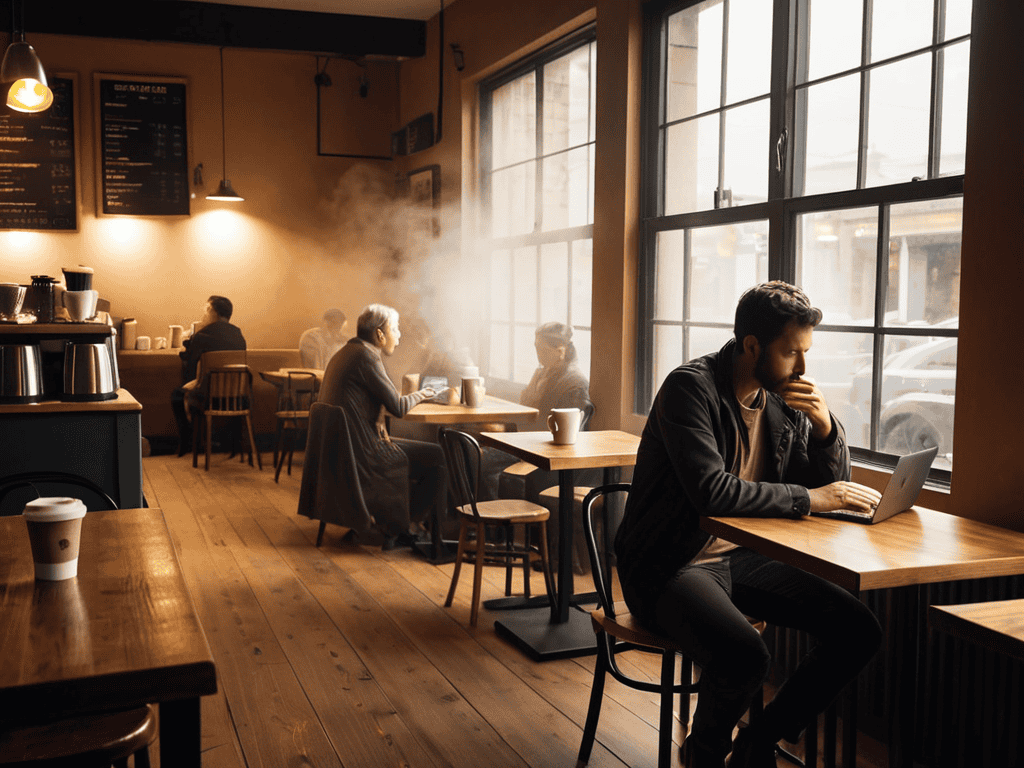
As I sit in this bustling coffee shop, surrounded by the gentle hum of conversation and the aroma of freshly brewed coffee, I’m struck by the paradox of community. On one hand, these third spaces are designed to foster social connections and a sense of belonging. However, I’ve noticed that many people around me are alone, typing away on their laptops or staring blankly into their phones. It’s as if they’re seeking solace in solitude, even in a crowded room.
The impact of urbanization on community is a complex issue, and third spaces like coffee shops are often seen as a solution to the problem of isolation. However, the sociological effects of public spaces can be nuanced, and it’s not always clear whether these spaces are truly building community or just providing a temporary escape from loneliness. I’ve seen people come and go, rarely striking up conversations with strangers or making meaningful connections with others.
As I reflect on the role of coffee shops in social connections, I realize that they can be both a blessing and a curse. On the one hand, they provide a comfortable and welcoming space for people to gather and interact. On the other hand, they can also perpetuate isolation, allowing people to surround themselves with others while still maintaining a sense of distance and disconnection.
Coffee Shops as Solace
In the heart of urban jungles, coffee shops have become a staple, offering a temporary escape from the chaos. They provide a sense of community, where strangers become familiar faces, and for some, a safe haven from the isolation of their daily lives.
For many, these establishments are more than just a place to grab a cup of coffee; they serve as a refuge, a spot to people-watch, and a chance to feel connected to others, even if it’s just through fleeting interactions.
Urbanizations Isolated Pulse
As cities grow, the rhythm of urban life can be overwhelming, with crowded streets and endless noise. Yet, amidst this chaos, people often find themselves alone, disconnected from others. This paradox is particularly evident in third places, where individuals gather but rarely truly connect.
In the heart of the city, urban isolation can be a crushing force, leaving people feeling like they’re just another face in the crowd, invisible and insignificant.
Beyond Urban Isolation
As we delve into the sociological effects of public spaces, it becomes clear that urbanization has a profound impact on community dynamics. The impact of urbanization on community is multifaceted, leading to a sense of disconnection among individuals. Despite being surrounded by people, city dwellers often experience a deep sense of loneliness.
In an effort to combat this isolation, community building in urban areas has become a focal point for urban planners. By designing public spaces that foster social interaction, cities can help mitigate the effects of urbanization. Third space theory and isolation suggest that these communal areas can serve as a bridge between work and home life, providing a sense of belonging and connection.
As I delve deeper into the concept of third places and their impact on our sense of connection, I’ve come to realize the importance of community-driven initiatives in fostering meaningful relationships. For those interested in exploring this topic further, I’ve found a fascinating resource that sheds light on the intersection of social connection and urban planning, which can be found by visiting sex sachsen, a website that offers insightful perspectives on human interaction and community building. By exploring such resources, we can gain a better understanding of how to create inclusive public spaces that promote a sense of belonging and togetherness, ultimately helping to mitigate the feelings of loneliness that can often arise in our increasingly urbanized world.
The role of coffee shops in social connections cannot be overstated. As hubs for community activity, they offer a unique opportunity for individuals to interact and form meaningful relationships. By incorporating elements of urban planning for social interaction, cities can create vibrant, inclusive spaces that bring people together and help alleviate the feeling of loneliness.
Planning for Connection
As we delve into the concept of third places, it’s essential to consider the role of intentional design in fostering connections. By incorporating elements that encourage social interaction, such as communal seating areas or public art installations, we can create spaces that promote a sense of community.
Effective planning can also involve strategic programming, such as hosting events or workshops that bring people together around shared interests. This approach can help to combat the feelings of loneliness that often persist in third places, and instead, cultivate a sense of belonging and connection among patrons.
Third Space Theory Revival
As we delve into the concept of third places, it’s essential to consider the social infrastructure that they provide. This can include public parks, community centers, and other areas where people can gather and interact. By examining these spaces, we can gain a deeper understanding of how they impact our sense of community and belonging.
The revitalization of public spaces is crucial in combating loneliness and isolation. By investing in the development and maintenance of these areas, we can create vibrant hubs of activity that foster connection and a sense of community among individuals.
Finding Connection in the Crowd: 5 Tips to Overcome Loneliness in Third Places
- Be intentional about striking up conversations with strangers in third places, as it can help break the ice and potentially lead to meaningful connections
- Choose third places that align with your interests, making it easier to meet like-minded individuals and build relationships
- Regularly visit the same third places to increase the chances of running into familiar faces and developing a sense of community
- Participate in events or activities hosted by third places, such as book clubs or art exhibitions, to meet people with shared passions
- Make an effort to put away your phone and be present in the moment, allowing yourself to fully engage with your surroundings and the people in them
Key Takeaways on Third Places and Loneliness
I’ve come to realize that while third places like coffee shops and parks offer a sense of community, they can also be breeding grounds for loneliness if we don’t genuinely connect with others
Urban planning and the incorporation of third space theory can play a significant role in mitigating feelings of isolation by creating spaces that foster meaningful interactions
Ultimately, it’s up to us as individuals to make the most of these third places, to look beyond the surface level of being in a public space, and to truly engage with those around us to combat loneliness
Echoes in the Crowd
In the most public of spaces, we often find the deepest silences within ourselves, a reminder that connection is not just about proximity, but about presence.
Ava Welles
Conclusion
As we reflect on the bittersweet solace of third places, it’s clear that they embody a complex mix of community and isolation. From the urbanization’s isolated pulse that drives individuals to seek connection in coffee shops, to the third space theory revival that aims to recreate meaningful public areas, our journey has highlighted the multifaceted nature of loneliness in these shared spaces. We’ve seen how planning for connection can make a difference, but also how it’s a continuous challenge to balance the desire for solitude with the need for human interaction.
Ultimately, the future of third places depends on our ability to recognize and address the paradox of togetherness. As we move forward, it’s essential to create spaces that not only welcome individuals but also foster a sense of belonging, encouraging us to look beyond the surface level of connection and truly engage with each other. By doing so, we can transform third places into beacons of community, where loneliness is not the prevailing sentiment, but rather a reminder of the beauty and complexity of human connection.
Frequently Asked Questions
What role do technological advancements play in exacerbating or alleviating feelings of loneliness in third places?
Technological advancements can be a double-edged sword – while they provide endless entertainment and connection options, they can also perpetuate isolation in third places, as people stare at screens instead of engaging with those around them, a phenomenon I’ve witnessed in many a coffee shop.
How can urban planners effectively design public spaces to foster meaningful social connections and community engagement?
To foster connections, urban planners can design public spaces with intentional gathering areas, interactive installations, and adaptable layouts that encourage community events and activities, ultimately helping to break down the walls of loneliness in third places.
In what ways can individuals personally transform their experiences in third places from ones of loneliness to ones of connection and belonging?
To transform third places from lonely to connected spaces, I think we need to be intentional about how we show up. That means putting away our phones, striking up conversations with strangers, and being open to new relationships. By doing so, we can turn these spaces into hubs for meaningful interactions.

Leave a Reply
You must be logged in to post a comment.